

High-Performance Stone Hardening
The Science of the Chemical Shine.
Vitrification is not a polish or a wax—it is a thermochemical reaction. For high-traffic commercial environments where maintaining a mirror-like finish is a constant challenge, vitrification “locks in” a shine while significantly increasing the stone’s surface density.
At TerCon Systems, we use vitrification as a precision tool. We don’t use it to hide poor craftsmanship; we use it to provide an extra layer of armor for calcium-based stones like Marble and Terrazzo in the most demanding environments.
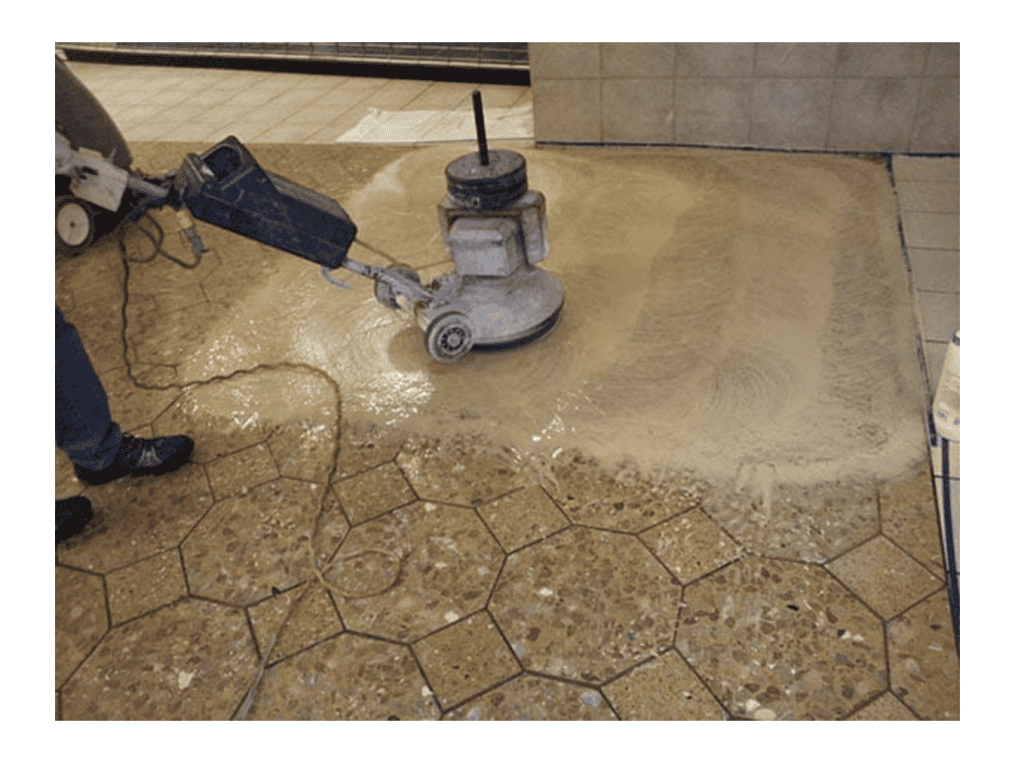
The Vitrification Process: How it Works
Unlike topical coatings that sit on top of the floor, vitrification changes the surface chemistry of the stone itself.
Mechanical Preparation
Vitrification is never applied to a dirty or etched floor. We perform a light diamond honing to ensure the stone is perfectly clean and the "pores" are open.
The Thermochemical Reaction
A specialized fluorosilicate solution is applied. Using heavy-duty machines and stainless steel wool, we create controlled friction heat, triggering a reaction with the stone's calcium carbonate.
Formation of Micro-Crystals
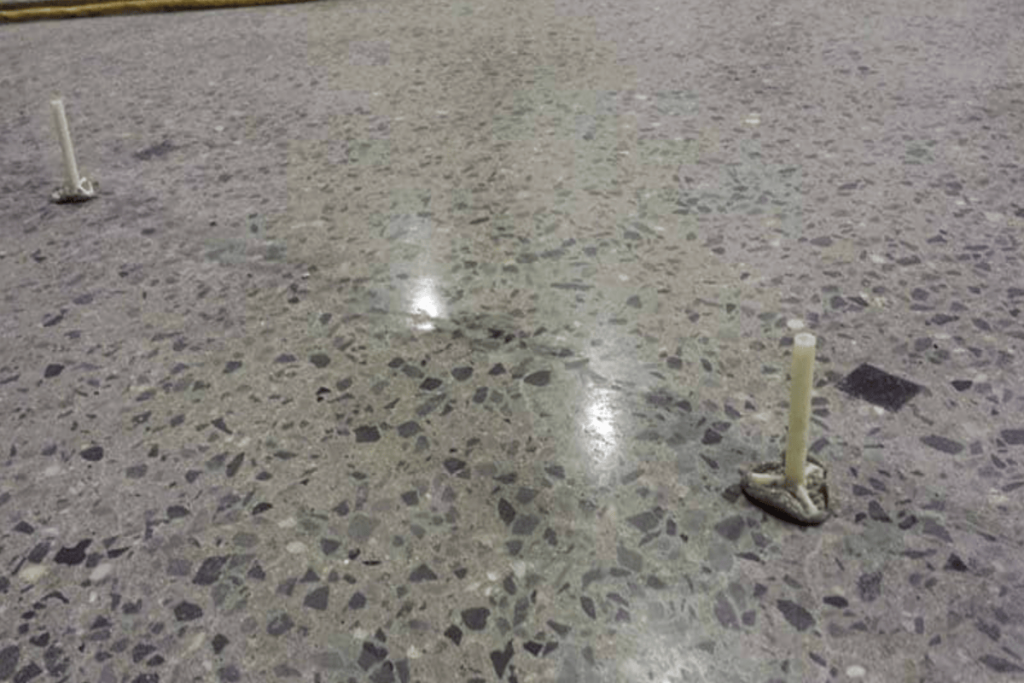
This creates a new, ultra-hard layer of calcium fluorosilicate. This "glass-like" finish is harder than the original stone and exceptionally clear.
Why Choose Vitrification for Your Facility?

Reduced Maintenance
The hardened surface resists “traffic lanes,” requiring less frequent polishing.

Increased Traction
Provides excellent slip resistance (SCOF) even with a high-gloss aesthetic.

Stain Repellency
Changes surface porosity, making it harder for spills to penetrate the stone.
"Wet Look" Clarity
Produces a deep, liquid-like reflection unreachable by standard polishing.
The TerCon Warning: When NOT to Vitrify
Many contractors use vitrification to “cheat”—applying it to unrefined stone to create a fake shine. This leads to an “orange peel” texture and stone suffocation.
TerCon Systems only utilizes vitrification after the stone has been properly diamond-honed. We ensure the stone can still “breathe,” preventing the moisture-trap issues that cause inferior crystallization jobs to flake or darken.
Stone Chemistry FAQ
No. Wax is a sacrificial layer of plastic or acrylic. Vitrification is a chemical transformation of the stone’s surface. Wax peels and yellows; vitrification does not.
If done repeatedly without professional honing, it can make stone brittle. However, as part of a TerCon Maintenance Program, it is a safe, highly effective way to protect high-traffic hotel lobbies and office plazas.
No. Vitrification requires a calcium-based stone to trigger the reaction. It is designed for Marble, Limestone, and Cement-based Terrazzo. For Granite, we recommend our Diamond Polishing systems.
Maintenance is simple: daily dust mopping and damp mopping with a pH-neutral cleaner. The hardened surface eliminates the need for aggressive scrubbing.
The odor is mild and dissipates quickly. Because the reaction happens instantly under the machine, there is zero dry time. The floor can be opened to foot traffic immediately.
“We combine 19th-century stone-craft with 21st-century chemistry.”
Does your high-traffic floor
need a harder armor?
Stop the cycle of constant buffing. Invest in a surface that stands up to the heaviest foot traffic.
Consult with our Stone ChemistsCall 810-908-0511