

Zero-Wax Terrazzo: Why Diamond Polishing Beats the Strip-and-Wax Cycle
If your building still relies on wax to keep its terrazzo looking good, you are paying for a shine that never lasts. Wax dulls, yellows, traps dirt, and demands constant stripping and reapplication. It is one of the highest hidden costs in facility management, and most owners do not realize there is a better way.
That better way is diamond polishing, a mechanical process that creates a permanent, wax-free shine by refining the stone itself. This guide explains the difference between the old strip-and-wax routine and modern polishing terrazzo floors with diamonds, why the switch saves money over time, and how a proper zero-wax finish keeps your floor looking its best for the life of the building.
The Hidden Cost of Wax
On the surface, waxing seems cheap. A crew applies a coat, the floor looks glossy, and everyone moves on. But that gloss is temporary, and the real expense is in the cycle it creates.
Here is what the strip-and-wax routine actually involves:
- Stripping the old, yellowed wax with harsh chemicals.
- Reapplying multiple coats of new wax.
- Buffing to bring up a shine that starts fading almost immediately.
- Repeating the whole process every few months, forever.
Each cycle costs labor, materials, and downtime, and it never ends. Worse, wax is a soft topical coating that sits on top of the terrazzo. It traps dirt, scuffs easily, and discolors over time, which means your floor often looks worse midway through the cycle than if it had no coating at all.
What Zero-Wax Diamond Polishing Actually Is
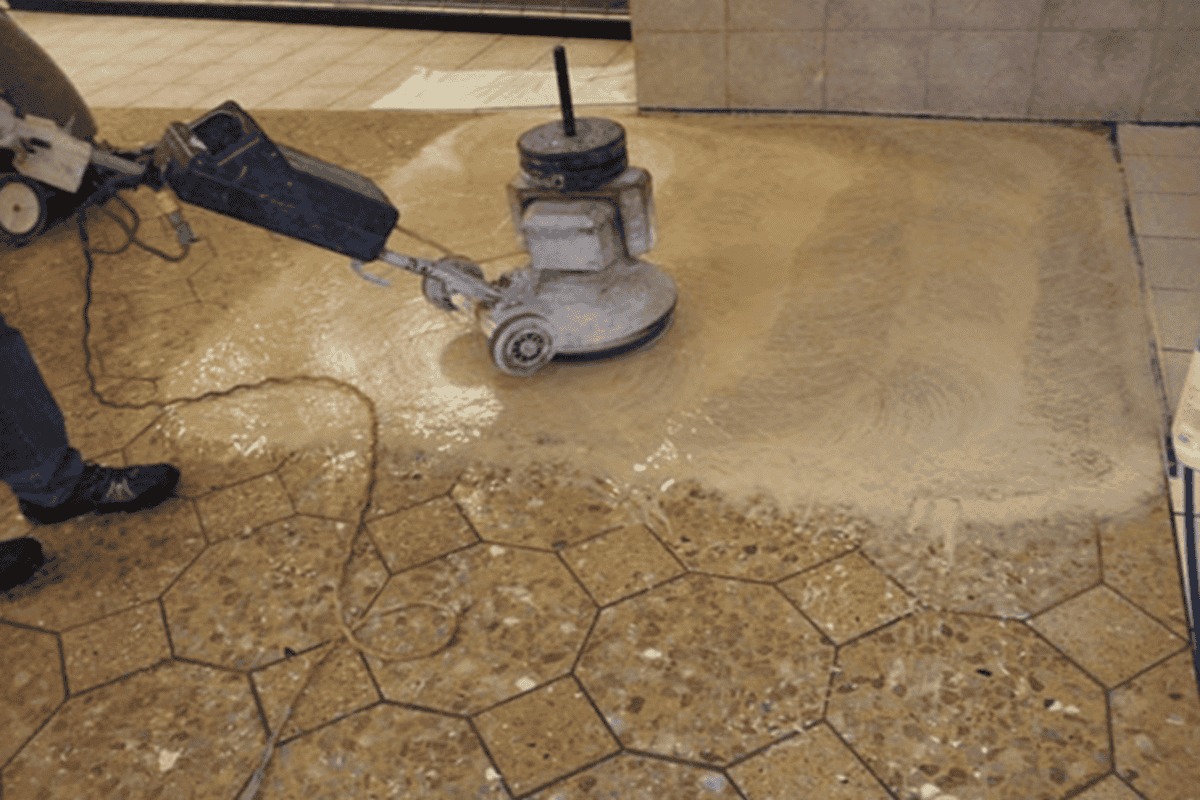
Diamond polishing takes a completely different approach. Instead of coating the surface, it refines the surface. Using industrial planetary machines fitted with progressively finer diamond abrasives, technicians grind and hone the actual stone until it reflects light on its own.
The process works in stages:
- Grinding removes old coatings, scratches, and surface damage.
- Honing smooths the surface through medium-grit diamonds.
- Polishing refines it with fine diamonds until a natural, glass-like clarity appears.
The result is a mechanical shine that comes from the terrazzo itself, not from a film laid over it. This is what the pros mean by a zero-wax finish. There is nothing to peel, yellow, or strip, because the beauty is built into the stone. TerCon Systems built its reputation on this kind of engineering-led terrazzo polish, replacing the endless wax cycle with a permanent, breathable, high-definition luster.
Strip-and-Wax vs. Diamond Polishing: A Direct Comparison
When you put the two methods side by side, the difference is hard to ignore.
Strip-and-wax:
- Temporary shine that fades in weeks or months.
- Yellows and discolors over time.
- Traps dirt and scuffs easily.
- Requires repeated stripping with harsh chemicals.
- Ongoing labor and material costs with no end.
Diamond polishing:
- Long-lasting shine that comes from the stone.
- Does not yellow or peel.
- Easier to clean and more resistant to wear.
- No chemical stripping cycle.
- One investment that protects the floor for years.
For anyone weighing the two, the math and the appearance both favor polishing terrazzo floor surfaces mechanically rather than coating them.
Why Wax Actually Costs More in the Long Run
This is the part that surprises most facility managers. The strip-and-wax cycle feels affordable per visit, but the cumulative cost is enormous.
Consider what you are paying for year after year:
- Recurring labor for stripping, waxing, and buffing.
- Chemicals and wax purchased again and again.
- Downtime while areas are closed off for the process.
- Premature wear as trapped grit scratches the surface under the coating.
By eliminating the wax coating entirely, a zero-wax diamond finish can reduce long-term maintenance costs dramatically, by as much as 60 percent in many facilities. You trade a permanent expense for a one-time investment, and your terrazzo floors cost far less to own over their lifespan. When you compare the true cost for terrazzo flooring upkeep across a decade, polishing wins clearly.
The Look and Durability Difference
Beyond the economics, there is a visible quality gap. Waxed floors have a plasticky sheen that reads as artificial up close, and it degrades quickly. Polished terrazzo floors have depth and clarity because you are seeing the actual marble, granite, or glass chips reflecting light.
That finish is also tougher. A mechanically polished surface resists scuffs and stains better than a wax coating, holds up under heavy foot traffic, and stays looking sharp far longer between services. In high-traffic lobbies, corridors, and retail spaces, that durability is exactly what you want.
Does Buffing and Polish Still Have a Role?
Yes, but a different one. Once a floor has a true diamond-polished finish, light upkeep keeps it looking its best between professional services:
- Buffing terrazzo floors periodically with the correct pad refreshes the glow.
- A compatible polish for terrazzo floor surfaces, used as directed, can enhance and protect the finish.
- Routine neutral-pH cleaning removes grit before it can dull the surface.
The key distinction is that this is maintenance of a mechanical finish, not a substitute for it. You are preserving a shine that already lives in the stone, not applying a temporary coating that has to be stripped later. For a deeper look at how buffing and polishing differ, TerCon’s guide on terrazzo polishing versus buffing breaks it down in detail.
Is It Worth Making the Switch?
If you are currently stuck in the strip-and-wax cycle, moving to a zero-wax finish almost always pays off. The upfront cost of a professional restoration and polish is a one-time investment, while waxing is a cost that repeats indefinitely.
The terrazzo floor price for a diamond-polished restoration depends on the floor’s condition and size, but the long-term savings on labor, chemicals, and downtime typically make it the smarter financial choice. And because the shine comes from the stone, you are protecting an asset that can last the life of the building rather than renting a temporary appearance.
How TerCon Delivers a Zero-Wax Finish
TerCon Systems specializes in exactly this transition. Its grinding and polishing service refines the terrazzo mechanically to a permanent, wax-free shine, eliminating the stripping cycle for good. The work is done with industrial HEPA-filtered dust containment that captures the vast majority of airborne particles at the source, so floors can be restored even in occupied hospitals, museums, and offices without disrupting operations.
TerCon restores terrazzo, stone, and concrete nationwide, with crews serving Florida, Illinois, Indiana, Michigan, New Jersey, New York, North Carolina, Ohio, Pennsylvania, and Wisconsin. Whether you manage a small historic building or a large commercial facility, the same engineering-led approach applies.
Frequently Asked Questions
Q: What does zero-wax terrazzo polishing mean? A: It means creating a shine by mechanically refining the stone with diamond abrasives rather than applying a wax coating. The result is a permanent, breathable finish that does not peel or yellow, which is why it outperforms waxing for polishing terrazzo floors.
Q: Is diamond polishing more expensive than waxing? A: It costs more upfront as a one-time service, but it is cheaper over time. Waxing is a recurring expense that never ends, while diamond polishing can cut long-term maintenance costs significantly, making the true cost for terrazzo flooring upkeep much lower.
Q: Will a polished terrazzo floor stay shiny? A: Yes. Because the shine comes from the stone itself, polished terrazzo floors hold their clarity far longer than waxed floors. Light buffing and neutral-pH cleaning keep them looking their best between professional services.
Q: Can I still use polish on a diamond-polished floor? A: You can use a compatible polish for terrazzo floor surfaces and buff gently as part of routine upkeep. The difference is that this maintains an existing mechanical finish rather than replacing it with a temporary coating.
Q: How much does it cost to switch from wax to a polished finish? A: The terrazzo floor price varies with the floor’s condition and size, so a written quote is the best way to know. In most cases, the long-term savings on stripping, waxing, and downtime make the switch well worth it.
Final Thoughts
Wax promises a quick shine but delivers a permanent expense. Every stripping cycle costs money, creates downtime, and leaves you with a coating that yellows and scuffs. Diamond polishing breaks that cycle by refining the stone into a lasting, zero-wax finish that looks better, lasts longer, and costs far less to maintain over the life of the building.
If you are ready to stop stripping and waxing and start owning a floor that shines on its own, request a free quote from TerCon Systems and find out what a true diamond-polished finish can do for your terrazzo.