

Modern Terrazzo Restoration Using Injection and Polishing
Why is terrazzo restoration gaining renewed attention today?
Terrazzo floors were designed for longevity, but longevity does not mean immunity. Across commercial buildings, institutions, and heritage properties, owners are reassessing ageing terrazzo not as a liability—but as an asset worth preserving. Rising terrazzo floor price, increasing material costs, and sustainability pressures have shifted attention toward terrazzo restoration rather than replacement. When executed correctly, restoring terrazzo floors delivers long-term performance at a significantly lower cost for terrazzo flooring over the asset’s lifecycle.
What drives the true cost of terrazzo floor repairs?
The real terrazzo floor cost is rarely about surface appearance alone. Subsurface voids, structural movement, moisture ingress, and failed adhesives often drive premature failure. These hidden issues frequently lead to cracking near a terrazzo divider strip, hollow sounds underfoot, and uneven wear patterns—conditions that demand more than cosmetic terrazzo repair.
What is Hollow Plane Injection, and why is it critical?
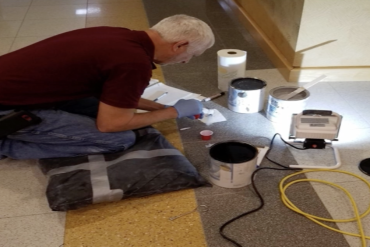
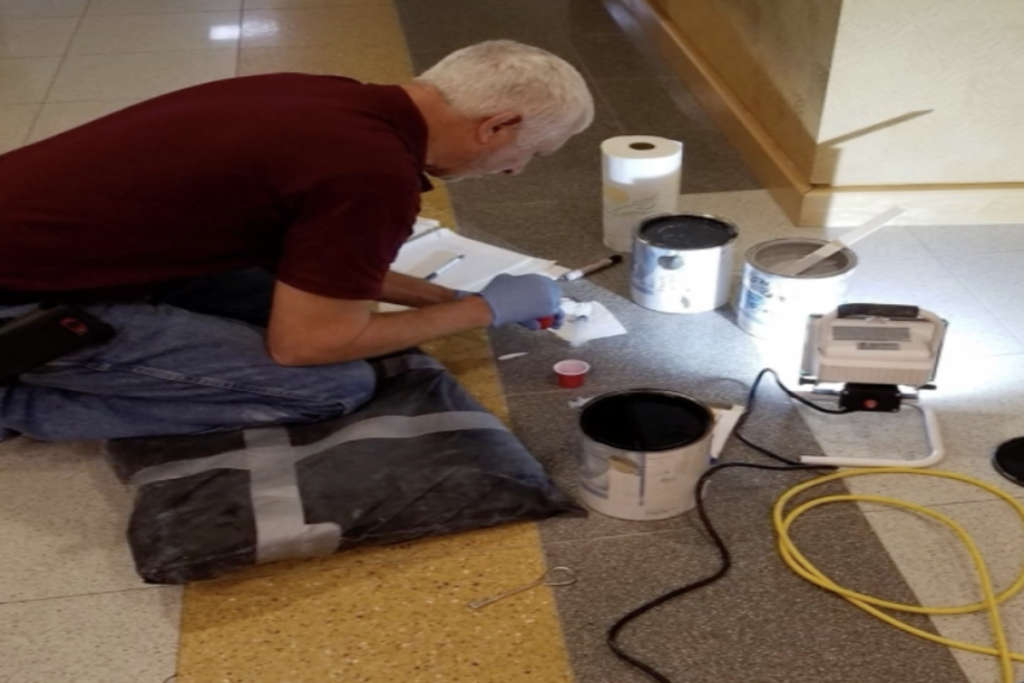
Hollow Plane Injection is a structural stabilisation technique that injects specialised resin beneath delaminated terrazzo sections. Rather than removing intact flooring, the method re-bonds the terrazzo to its substrate, restoring load-bearing integrity. For modern terrazzo flooring restoration, this approach has become essential because it addresses the root cause of failure—not just the symptom.
How does Hollow Plane Injection control restoration budgets?
Traditional removal and replacement can push terrazzo floors’ cost well beyond initial estimates due to demolition, disposal, and extended downtime. Hollow Plane Injection avoids these cost drivers. By stabilising existing material, it reduces labour hours, material waste, and operational disruption—keeping terrazzo floor price within predictable, manageable ranges.
Why is terrazzo grinding required after structural repairs?
Once structural stability is restored, terrazzo grinding ensures surface uniformity. Grinding terrazzo removes lippage, residual coatings, and surface imperfections created over the years of wear. This step is foundational—without it, subsequent polishing of terrazzo floor systems cannot perform consistently or durably.
What role does terrazzo polishing play in long-term performance?
Polishing terrazzo floors is not simply about shine. Polishing densifies the surface, closes pores, and enhances resistance to abrasion and staining. When combined with the correct Polish for terrazzo floor, the result is hardened, polished terrazzo floors that outperform many modern flooring alternatives in both durability and maintenance efficiency.
Is there a difference between buffing and polishing terrazzo floors?
Yes—and the distinction matters. Buffing terrazzo floors is a finishing step that enhances gloss and clarity, while polishing involves a progressive, multi-stage abrasion process. In professional terrazzo flooring polishing, both are applied strategically to achieve optimal surface density, reflectivity, and wear resistance.
Why is combining injection and polishing considered best practice?
Individually, each technique solves a specific problem. Together, they form a complete system. Hollow Plane Injection secures the structure; grinding terrazzo prepares the surface; polishing delivers durability and aesthetics. This integrated approach reduces future terrazzo floor repairs and significantly lowers the lifetime cost for terrazzo flooring ownership.
How long can restored terrazzo floors realistically last?
When executed to professional standards, restored terrazzo floors routinely exceed several decades of service life. Structural stabilisation prevents recurring cracks, while ongoing terrazzo flooring polishing minimises wear. In cost terms, this often outperforms replacement by a wide margin, particularly in high-traffic commercial environments.
Is restoration always more economical than replacement?
In most commercial and institutional settings, yes. Replacement introduces volatile material pricing, installation risk, and extended downtime. By contrast, restoring terrazzo floors through injection, grinding, and polishing can reduce capital expenditure by 40–70% while preserving architectural continuity.
What should decision-makers look for in a terrazzo repair company?
A capable Terraazzo floor repair company should demonstrate expertise across structural repair, grinding, and polishing—not just surface refinishing. Proven experience with divider strip systems, subsurface stabilisation, and large-scale projects is critical to achieving durable outcomes.
Why do asset managers choose TerCon System?
TerCon System applies a systems-based approach to terrazzo restoration, integrating Hollow Plane Injection, precision grinding, and advanced polishing techniques. The result is predictable performance, controlled costs, and extended flooring life—key metrics for facilities teams managing long-term assets.
Does polishing reduce future maintenance costs?
Decisively. Proper terrazzo polish hardens the surface, improves chemical resistance, and lowers daily maintenance demands. Over time, this reduces the frequency and scope of future terrazzo floor repairs, delivering measurable operational savings.
The bottom line
The combination of Hollow Plane Injection and terrazzo polishing represents a disciplined, financially sound approach to terrazzo flooring restoration. Structural stability paired with surface performance delivers durability, aesthetics, and long-term cost control. For organisations focused on asset preservation rather than short-term fixes, this strategy offers one of the strongest returns on investment in modern flooring restoration.