

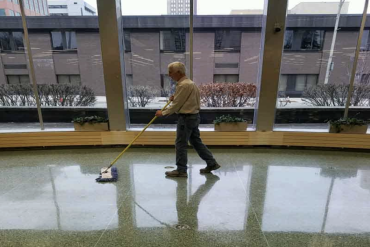
Terrazzo Grinding and Polishing for Long-Term Floor Performance
Terrazzo floors were never meant to be disposable. Installed in civic buildings, airports, hospitals, and commercial landmarks, they were engineered for longevity long before sustainability became a boardroom priority. Yet decades later, many of these floors face an uncertain future—not because they have failed, but because their condition is misunderstood.
Cracks, dullness, uneven surfaces, and visible wear often lead owners to assume replacement is inevitable. In reality, terrazzo grinding and polishing offers a far more strategic option: restoring performance, appearance, and value at a fraction of the cost of terrazzo floor replacement.
For asset managers and property owners focused on lifecycle value, terrazzo grinding and polishing have become the cornerstone of modern terrazzo flooring restoration.
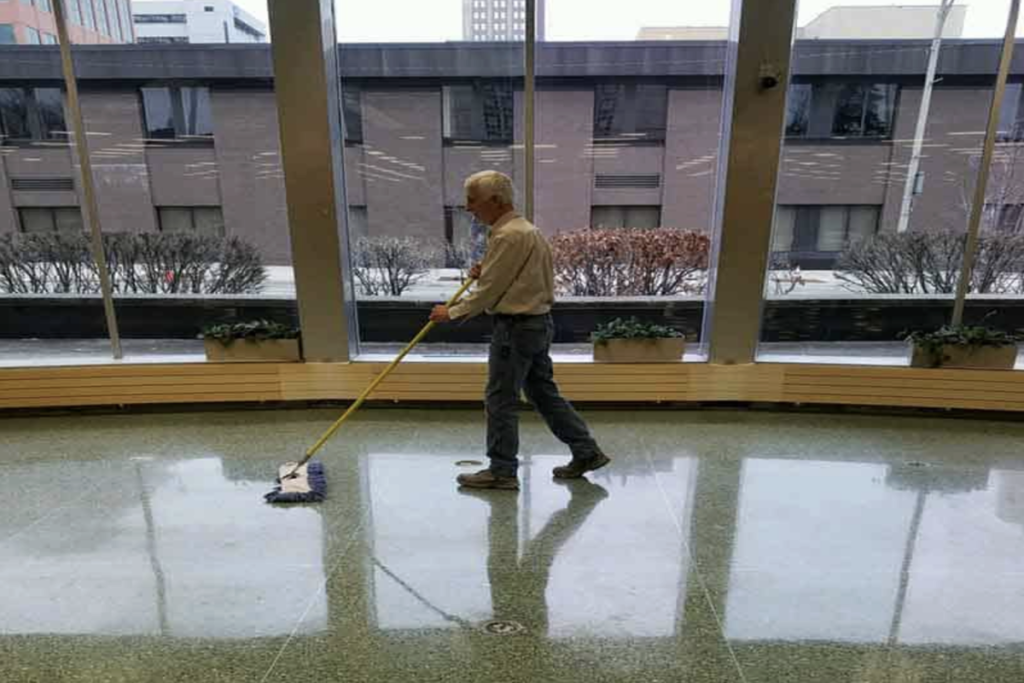
Why Terrazzo Floors Deteriorate Over Time
Terrazzo is durable, but it is not immune to physics. Structural movement, moisture migration, ageing adhesives, and decades of foot traffic gradually compromise the surface. Common issues include:
- Differential settlement is causing cracks near a terrazzo divider strip
- Hollow spots beneath the surface
- Loss of reflectivity and surface hardness
- Lippage between terrazzo sections
- Worn sealers trap dirt rather than protecting the floor
These conditions often trigger calls for terrazzo repair, but surface-level fixes rarely address the real problem. Effective restoration begins with understanding that terrazzo is a system—substrate, binder, aggregate, and finish—not just a surface.
Grinding Terrazzo: Resetting the Floor’s Foundation
Grinding terrazzo is the structural reset button. Using industrial diamond abrasives, technicians remove surface damage, coatings, and unevenness to expose a clean, uniform terrazzo plane. This process corrects lippage, eliminates scratches, and prepares the floor for long-term performance.
Contrary to perception, terrazzo grinding is not aggressive demolition. It is controlled material refinement. Each pass removes microns, not millimetres, preserving the integrity of the floor while correcting decades of wear.
Grinding terrazzo is also where many cost variables are determined. Floors with extensive damage may require multiple grinding stages, influencing the terrazzo floor price. However, even in complex cases, grinding remains significantly more cost-effective than replacement when evaluating the total cost for terrazzo flooring.
Polishing Terrazzo Floors: Performance Disguised as Shine
Once the surface is properly ground, polishing terrazzo floors transforms the material from functional to exceptional. Polishing is not cosmetic—it is chemical and mechanical densification.
Through progressive diamond polishing and the application of a specialised Polish for terrazzo floor, the surface becomes harder, less porous, and more resistant to abrasion. This process creates polished terrazzo floors that outperform many modern flooring systems in durability and maintenance efficiency.
The distinction matters. A polished terrazzo floor does not rely on topical coatings that wear off. Instead, the shine is part of the floor itself. As a result, polishing terrazzo floor systems reduces ongoing maintenance costs while extending service life.
Buffing vs Polishing: Why the Difference Matters
In professional restoration, buffing terrazzo floors is often misunderstood. Buffing enhances clarity and reflectivity after polishing, but it cannot substitute for true polishing.
- Terrazzo flooring polishing: Multi-stage diamond abrasion that densifies and hardens the surface
- Buffing terrazzo floors: Final refinement step that enhances gloss and visual consistency
When combined correctly, these steps deliver floors that are not only visually striking but structurally resilient—critical for high-traffic commercial environments.
Restoring Terrazzo Floors Instead of Replacing Them
Replacement has hidden costs. Demolition, waste disposal, downtime, and new materials quickly escalate budgets. By contrast, restoring terrazzo floors preserves existing assets while delivering measurable financial advantages.
From a cost perspective:
- Restoration typically costs 40–70% less than replacement
- Downtime is significantly reduced
- Original architectural character is preserved
- Long-term maintenance costs decrease
These benefits explain why terrazzo flooring restoration has gained renewed traction across commercial real estate portfolios, particularly as material prices continue to rise.
Addressing Structural Issues During Terrazzo Restoration
Grinding and polishing alone cannot solve every problem. Structural voids beneath the surface often require stabilisation before polishing can deliver lasting results. This is where professional terrazzo floor repairs integrate seamlessly with grinding and polishing workflows.
Cracks near divider strips, hollow sounds underfoot, and movement-related failures must be addressed first. Skipping this step risks cosmetic success but structural failure—a costly mistake that inflates future terrazzo repair budgets.
Understanding Terrazzo Floors Cost and ROI
The terrazzo floors cost equation extends far beyond square-metre pricing. True cost evaluation includes:
- Surface condition and depth of damage
- Structural stability
- Traffic volume
- Maintenance requirements post-restoration
- Expected lifespan after treatment
When these factors are considered, polished terrazzo consistently delivers one of the strongest returns on investment in commercial flooring. Lower cleaning costs, extended lifespan, and reduced repair frequency directly impact operational budgets.
In many cases, restored terrazzo floors outperform new flooring systems in both durability and long-term economics.
Why Professional Expertise Matters
Not all terrazzo restoration is equal. A qualified Terraazzo floor repair company must understand structural behaviour, diamond tooling, polishing chemistry, and substrate conditions. Inexperienced operators often rely on surface coatings that temporarily improve appearance but accelerate long-term deterioration.
Professional restoration integrates:
- Structural assessment
- Precision grinding terrazzo
- Controlled polishing systems
- Correct divider strip treatment
- Long-term maintenance planning
This integrated approach ensures floors perform as assets, not liabilities.
Why the TerCon System Is Central to Modern Terrazzo Restoration
TerCon System has built its reputation on system-based terrazzo restoration rather than surface-level fixes. Their approach combines structural repair, precision grinding, and advanced polishing to deliver predictable outcomes and controlled costs.
By treating terrazzo as an engineered surface—not just a decorative one—TerCon System helps property owners restore terrazzo floors with confidence, clarity, and long-term value.
The Strategic Advantage of Polished Terrazzo Floors
From a portfolio perspective, polished terrazzo floors offer rare alignment between sustainability, performance, and economics. They reduce waste, lower lifecycle costs, and enhance architectural value—three priorities increasingly demanded by institutional stakeholders.
As organisations seek smarter ways to manage ageing infrastructure, terrazzo grinding and polishing have moved from niche craft to a strategic solution.
Final Perspective
Terrazzo floors were built to last. Grinding and polishing simply allow them to fulfil that promise.
When executed professionally, terrazzo restoration transforms worn surfaces into durable, high-performance assets—without the cost, disruption, and waste of replacement. For decision-makers evaluating long-term value, terrazzo grinding and polishing remains one of the most financially and operationally sound investments available in commercial flooring.