

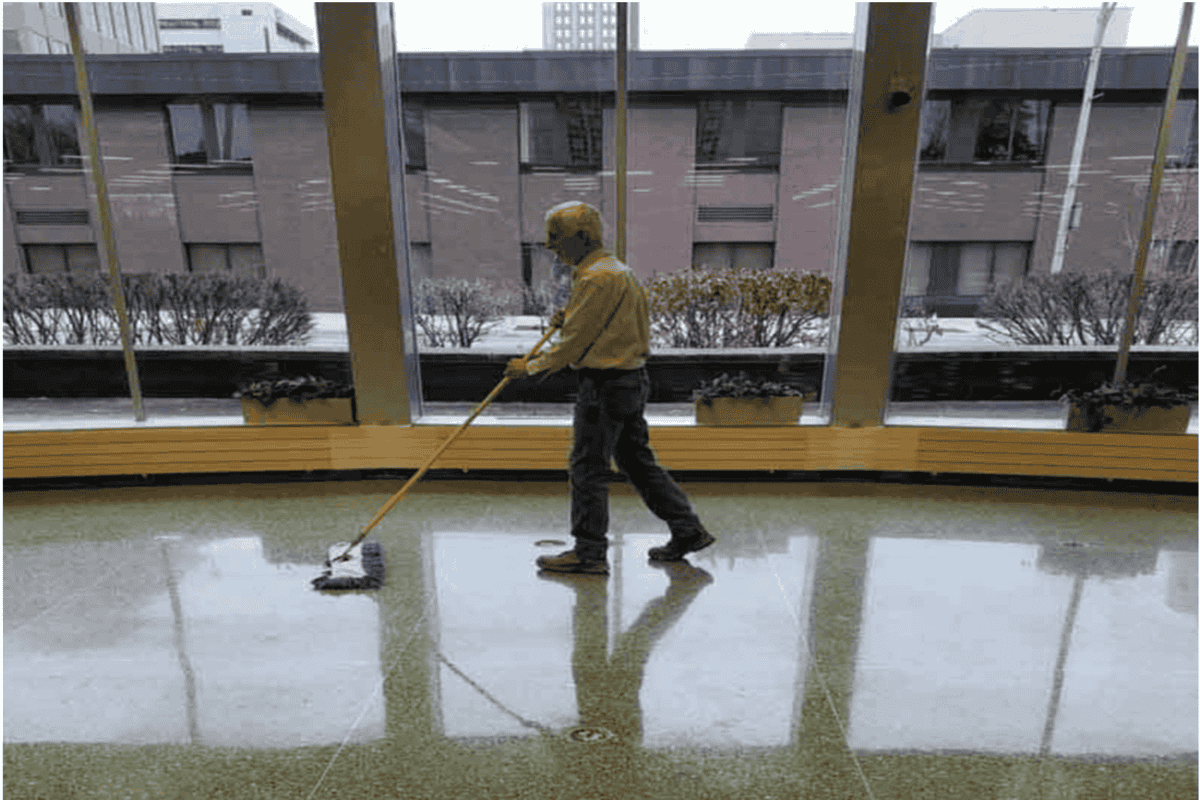
Terrazzo Polishing and Grinding: How Professionals Bring Old Floors Back to Life
Few flooring materials age as gracefully as terrazzo. When it is cared for, it can outlast the building around it. When it is neglected, it turns dull, scratched, and lifeless, and many owners assume the only fix is a full tear-out. In reality, most tired floors do not need replacement at all. They need the right combination of grinding, honing, and polishing.
This guide walks through exactly how professionals restore that mirror-like finish, what happens during the repair stage, how divider strips fit into the picture, and what the whole project typically costs. Whether you manage a hospital lobby, a school corridor, or a historic home, understanding the process helps you make a smart, cost-effective decision.
Why Terrazzo Loses Its Shine
Terrazzo is a composite of marble, granite, glass, or quartz chips set in a cement or epoxy binder, then ground smooth and sealed. That surface is durable, but it is not indestructible. Over years of foot traffic, several things happen:
- Micro-scratches from grit, sand, and debris dull the reflective surface.
- Old waxes and coatings build up, trap dirt, and yellow over time.
- Etching occurs when acidic spills react with the calcium in cement-based terrazzo.
- Cracks and chips appear as the slab moves, settles, or takes impact.
The good news is that the beauty of terrazzo lives inside the material, not on a thin coating on top. Because the chips run through the full depth of the topping, polishing terrazzo floors simply exposes fresh, undamaged stone. That is why a floor from the 1950s can look brand new again without replacing a single tile.
Grinding vs. Polishing: What Is the Difference?
People often use the terms interchangeably, but grinding and polishing are two distinct stages of the same job.
- Terrazzo grinding is the aggressive first step. Using heavy machines fitted with diamond abrasives, technicians remove the damaged top layer, level uneven surfaces, and strip away old coatings.
- Polishing is the refinement stage. Progressively finer diamonds close the pores of the stone and build up a natural, glass-like shine.
Both stages are handled together in a professional terrazzo grinding and polishing service, which is what produces a finish that lasts.
Think of grinding terrazzo as sculpting and polishing as finishing. You cannot get a lasting, high-gloss result by skipping the grinding phase, and you cannot get a durable shine by grinding alone.
The Terrazzo Polishing and Grinding Process, Step by Step
Professional terrazzo flooring restoration follows a proven sequence. Each pass matters, and rushing any stage shows up in the final result.
Step 1: Assessment and Preparation
Before any machine touches the floor, a technician inspects the surface for cracks, holes, hollow spots, and failing divider strips. The area is cleared, baseboards are protected, and the room is contained to control dust. This is also when a reputable terrazzo floor repair company will flag any structural issues that need attention first.
Step 2: Coarse Grinding
Heavy diamond grinding removes scratches, old sealers, and surface stains. For floors that are uneven or have decades of buildup, this is where the transformation begins. Coarse grinding also opens up any hidden cracks and voids so they can be filled properly in the next stage.
Step 3: Repairs and Filling
With the surface exposed, technicians can now handle terrazzo crack and substrate repairs correctly:
- Cracks are cleaned out and filled with a color-matched epoxy or cement grout.
- Chips and holes are patched with material blended to match the surrounding chips.
- Loose or damaged divider strips are secured or replaced.
Filling at this stage, rather than at the end, means the patches get ground and polished along with the rest of the floor, so they blend in almost invisibly. This is the heart of any effort to restore terrazzo without ripping it out.
Step 4: Honing
Honing uses medium-grit diamonds to erase the marks left by coarse grinding. The floor starts to smooth out and take on a soft, satin appearance. Skipping or shortening this step is the most common reason a DIY finish looks cloudy.
Step 5: Polishing
Now the fine diamonds come out. Each successively finer pass, often up to 3000 grit or higher, refines the surface until it reflects light cleanly. This is what most people picture when they think of polished terrazzo floors: deep clarity, rich color, and a genuine shine that comes from the stone itself rather than a topical wax.
Step 6: Sealing and Buffing
A penetrating sealer protects the surface against stains and moisture without leaving a plastic-looking film. Finally, buffing terrazzo floors with a high-speed burnisher locks in the gloss and gives that showroom finish. A quality polish for terrazzo floor surfaces, paired with regular buffing, is what keeps the shine alive between deep restorations.
Where Divider Strips Fit In
One detail that separates a professional job from an amateur one is how the terrazzo divider strip is handled. Those thin metal or plastic lines you see running through terrazzo are not just decorative. They control cracking, define color fields, and allow the material to expand and contract.
During terrazzo flooring polishing, divider strips need special care:
- Zinc, brass, or aluminum strips are ground flush, so they sit perfectly level with the surrounding chips.
- Corroded or lifted strips are replaced before polishing, not after.
- Original design lines are preserved, which matters enormously in historic buildings.
A floor can be perfectly polished and still look wrong if the divider strips are scratched, tarnished, or uneven. Attention to this detail is a reliable sign that you are working with a true specialist.
Can You Polish Terrazzo Yourself?
It is a fair question, especially for a small area. Honestly, light maintenance is within reach for a careful owner: routine cleaning, spot buffing, and reapplying a compatible polish for terrazzo floor surfaces can extend the life of a finish.
Full restoration is a different story. Professional-grade grinding and polishing terrazzo floor work requires:
- Commercial planetary grinders and a full range of diamond abrasives.
- Experience matching the sequence of grits, since skipping steps leaves swirl marks.
- Dust containment and water management, which is messy and equipment-heavy.
- Color-matching skill for repairs and divider strip replacement.
For anything beyond simple upkeep, hiring a professional almost always delivers a better result for less money in the long run, because mistakes in restoring terrazzo floors are expensive to correct.
How Much Does It Cost?
This is usually the first thing owners want to know, so let’s talk numbers. Keep in mind that terrazzo floor cost estimates vary widely by region, floor condition, and project size, so treat these as general ranges and get a written quote for your space.
- Basic cleaning and polishing: roughly $2 to $4 per square foot.
- Standard restoration (grinding, minor repairs, honing, polishing, sealing): roughly $4 to $8 per square foot.
- Heavy restoration with significant crack repair, divider strip replacement, or historic detailing: $8 to $15 or more per square foot.
A few factors that move the terrazzo floor price up or down:
- Square footage. Larger jobs often earn a lower per-foot rate.
- Condition. A neglected floor with deep damage costs more to bring back.
- Access and layout. Tight rooms, stairs, and heavy furniture add labor.
- Repairs needed. Extensive terrazzo repair and strip work add to the total.
Here is the perspective that matters most. The cost for terrazzo flooring restoration is a fraction of the cost of tearing out and installing new floors, and the result often lasts decades. Compared with replacing the material entirely, restoration is the value choice nearly every time.
Restoration vs. Replacement: The Smart Math
When a floor looks bad, replacement feels like the obvious answer. It rarely is. Consider what you already own:
- The chips and binder still have plenty of usable depth.
- The color, pattern, and character are irreplaceable, especially in older buildings.
- The subfloor and structure are already in place.
Choosing to restore terrazzo instead of replacing it preserves that value while avoiding the disruption, downtime, and expense of demolition. In most commercial and residential settings, terrazzo restoration delivers a like-new floor for far less than a new installation, with none of the landfill waste.
TerCon Systems restores terrazzo nationwide, with crews serving Florida, Illinois, Indiana, Michigan, New Jersey, New York, North Carolina, Ohio, Pennsylvania, and Wisconsin, so this same process is available whether your floor sits in a corporate lobby or a century-old public building.
Keeping Your Floors Looking New
Once the hard work of restoring terrazzo floor surfaces is done, a simple maintenance routine protects your investment:
- Dust mop daily to remove abrasive grit before it scratches.
- Clean with a neutral pH cleaner, never acidic or harsh products.
- Reseal periodically based on traffic and wear.
- Schedule routine buffing to refresh the gloss between deep polishes.
- Address spills quickly to prevent etching and staining.
With this care, the results of terrazzo flooring restoration can hold up beautifully for years before the next full service is needed.
When to Call a Professional
It is worth bringing in a specialist when you notice any of the following:
- The floor looks permanently dull no matter how much you clean it.
- There are visible cracks, chips, or hollow-sounding areas.
- Divider strips are lifting, tarnished, or missing.
- Old wax or coatings have yellowed and trapped dirt.
- You are preparing a property for sale, lease, or a major event.
A qualified terrazzo floor repair company can assess the surface, recommend the right level of service, and give you an accurate quote before any work begins.
Frequently Asked Questions
Q: How long does terrazzo polishing and grinding take? A: Most standard projects take one to three days, depending on the square footage and how much repair work is needed. Larger commercial floors or jobs with extensive crack and divider strip repair can take longer, and your contractor should give you a clear timeline with the quote.
Q: Will grinding damage or thin out my terrazzo floor? A: No. Professional grinding removes only a very thin top layer to expose fresh stone underneath. Terrazzo toppings are thick enough to be ground and polished multiple times over their lifespan, which is exactly why floors from decades ago can be restored instead of replaced.
Q: How much do terrazzo floors cost to restore? A: Restoration typically runs from about $2 to $15 or more per square foot, depending on the floor’s condition, the repairs required, and the project size. That terrazzo floor price is almost always far lower than the cost for terrazzo flooring replacement, which is why restoration is the smart financial choice.
Q: Can damaged divider strips be fixed during restoration? A: Yes. Loose, corroded, or missing terrazzo divider strips are secured or replaced during the repair stage, then ground flush and polished with the rest of the floor so they blend in seamlessly. Handling strips correctly is a key sign of a true specialist.
Q: How do I keep my terrazzo shiny after it is polished? A: Dust mop regularly, clean with a neutral pH product, avoid acidic cleaners, and schedule periodic buffing and resealing. With simple upkeep, polished terrazzo floors can hold their shine for years before the next deep restoration is needed.
Final Thoughts
Terrazzo does not wear out the way other floors do. It waits. Beneath the scratches and haze sits the same stunning material that was installed decades ago, ready to shine again. Through careful grinding, precise repairs, attentive divider strip work, and progressive polishing, professionals can transform a floor that looks ready for demolition into one that turns heads.
If your terrazzo has lost its luster, resist the urge to replace it. A proper polish and restoration will almost certainly cost less, look better, and last longer than anything new you could put in its place.
Ready to see what your floor can become? Request a free quote from TerCon Systems and let your original terrazzo prove just how much beauty it still has left.