

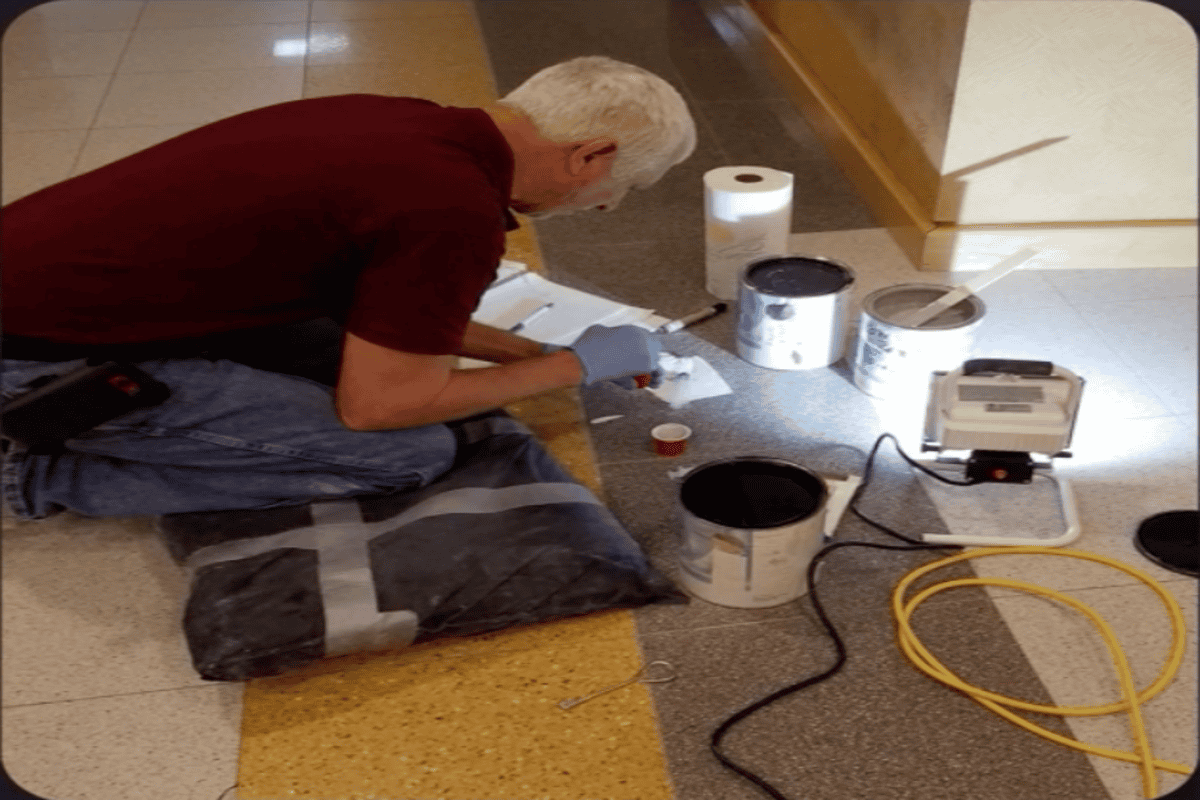
Terrazzo Forensics: What Floor Damage Can Tell You About a Building

A trained eye reads cracks, stains, and wear the way a detective reads a crime scene.
When most people look at a terrazzo floor, they notice its appearance. They see the shine, the pattern, or perhaps a crack that needs attention. Experienced restoration professionals, however, see much more. Every stain, crack, worn pathway, and repair tells a story about the building itself.
Over time, terrazzo floors become a record of what has happened inside a property. They reveal how people move through a space, how well the building has been maintained, and even whether hidden structural issues may exist beneath the surface.
This is why many professionals refer to floor assessments as a form of terrazzo forensics. Before any terrazzo restoration or terrazzo repair begins, understanding the cause of the damage is often just as important as fixing it.
A terrazzo floor can reveal decades of history if you know what to look for.
Why Terrazzo Floors Are Excellent Historical Records
One of the reasons terrazzo flooring is so valuable is its remarkable durability. Unlike many flooring materials that are replaced every 10 to 20 years, terrazzo can remain in service for generations.
The average terrazzo flooring lifespan can easily exceed 75 years, and many historic installations have surpassed the 100-year mark.
Because terrazzo lasts so long, it experiences multiple phases of a building’s life. Schools expand, hospitals renovate, office buildings change ownership, and airports undergo modernization projects. Through all of these changes, the floor remains.
As a result, terrazzo often contains clues that reveal what a building has experienced over time.
This is particularly true for commercial terrazzo flooring in schools, hospitals, government facilities, and transportation hubs, where traffic patterns remain visible for decades.
TerCon Systems applies this same forensic approach nationwide — from historic installations in Michigan to coastal Florida properties and inland Florida facilities, and across commercial buildings in Illinois, Indiana, New Jersey, New York, North Carolina, Ohio, Pennsylvania, and Wisconsin.
What Cracks Can Tell You
One of the most common reasons property owners seek terrazzo floor repair is cracking. However, not all terrazzo floor cracks have the same cause.
Hairline Cracks
Small hairline cracks are often the result of age and natural building movement. These are generally cosmetic and can be addressed through professional terrazzo crack repair.
Settlement Cracks
Long cracks that run across large portions of the floor may indicate foundation settlement or structural movement beneath the slab.
In these situations, repairing the visible crack alone may not prevent future problems.
Repaired Cracks That Return
When a crack reappears after previous repairs, it usually suggests ongoing movement within the building. An experienced terrazzo restoration contractor will investigate the source before recommending solutions.
This type of analysis is a critical part of the terrazzo restoration process.
Foot Traffic Leaves a Permanent Signature
One of the most fascinating aspects of terrazzo forensics is studying wear patterns.
Over decades of use, people naturally create pathways across a building. These patterns become visible through differences in shine, surface texture, and wear levels.
For example:
- Schools often show heavily worn routes between classrooms and cafeterias.
- Hospitals commonly reveal traffic patterns connecting elevators, patient rooms, and nurses’ stations.
- Airports frequently display concentrated wear near security checkpoints and boarding gates.
Even after terrazzo floor polishing, these patterns often provide valuable insights into how a facility functions.
This is one reason terrazzo flooring for schools, terrazzo flooring for hospitals, and terrazzo flooring for airports remains such a practical choice. Despite constant use, the floor can be restored rather than replaced.
Stains Can Reveal Hidden Problems
Many building owners view stains as purely cosmetic issues. In reality, terrazzo floor stains often provide clues about larger concerns.
Water Stains
Dark spots or discolouration may indicate moisture intrusion from leaking pipes, roof issues, or drainage problems.
Rust Stains
Rust-colored marks can point to corrosion in nearby metal components, including reinforcement materials or terrazzo divider strips.
Chemical Damage
In commercial environments, chemical spills may leave visible evidence that helps identify past maintenance or operational issues.
Before beginning terrazzo floor cleaning, restoration professionals often investigate the source of the stain rather than simply treating the surface.
Dull Floors Tell a Maintenance Story
A loss of shine is one of the most common complaints among property owners.
While terrazzo polishing can often restore the appearance, the condition of the surface can reveal a great deal about a building’s maintenance history.
A dull floor may indicate:
- Infrequent terrazzo maintenance
- Improper cleaning chemicals
- Lack of terrazzo floor sealing
- Excessive wear from foot traffic
- Years of neglected care
Professional terrazzo polishing services not only improve appearance but also help identify deeper issues that may require additional restoration work.
The Clues Hidden in Previous Repairs
Many older buildings contain evidence of past restoration efforts.
During terrazzo floor refinishing or terrazzo floor resurfacing projects, restoration specialists often uncover:
- Mismatched repair materials
- Inconsistent aggregate blends
- Poorly executed patching
- Incorrect grout colors
- Surface coatings that should not have been applied
These discoveries help determine whether the floor requires a simple cosmetic update or a more comprehensive terrazzo floor restoration.
Some of the most dramatic terrazzo restoration before and after transformations begin by correcting mistakes from earlier repairs.
Terrazzo Divider Strips Can Signal Structural Issues
Terrazzo divider strips are often viewed as decorative elements, but they also serve an important functional role.
These strips help control cracking and allow movement within the floor system.
When divider strips begin separating from the surrounding terrazzo, it may indicate:
- Structural movement
- Moisture-related expansion
- Improper installation
- Substrate issues
Careful inspection of terrazzo divider strips is a standard part of any professional assessment.
What Surface Wear Says About Building Management
The overall condition of a terrazzo floor often reflects how well a property has been maintained.
Buildings with strong maintenance programs usually have floors that exhibit:
- Consistent shine
- Minimal staining
- Limited cracking
- Proper cleanliness
Properties with neglected maintenance often show:
- Heavy scratching
- Embedded dirt
- Surface etching
- Significant discoloration
Following basic terrazzo floor maintenance tips can dramatically extend the life and appearance of a floor.
Proper terrazzo floor care is one of the most cost-effective ways to protect a long-term flooring investment.
QUICK TAKEAWAY
If your floor’s shine, staining, or cracking pattern doesn’t match its maintenance history, it may be time to talk with our team about a full assessment.
Restoration vs Replacement: Reading the Evidence
Many property owners assume that visible damage automatically means replacement is necessary.
In reality, terrazzo floor replacement is often unnecessary.
A professional evaluation frequently reveals that the structural integrity of the floor remains strong despite surface wear.
When comparing terrazzo floor replacement vs restoration, restoration often provides several advantages:
- Lower project costs
- Less disruption
- Preservation of original materials
- Faster completion times
For many property owners, terrazzo restoration services offer a better return on investment than complete replacement.
How Modern Epoxy Terrazzo Flooring Differs
The forensic approach applies to both historic and modern floors.
Epoxy terrazzo flooring behaves differently from traditional cement-based terrazzo systems.
While epoxy terrazzo flooring offers exceptional durability and design flexibility, damage patterns can reveal:
- Moisture issues
- Installation problems
- Substrate movement
- Heavy traffic zones
Understanding these indicators helps restoration professionals develop more effective repair strategies.
Why Professional Evaluation Matters
Successful restoration begins with understanding the cause of the damage.
A crack may point to settlement.
A stain may reveal moisture intrusion.
A dull surface may indicate years of improper cleaning.
Without proper diagnosis, repairs often address symptoms rather than the underlying problem.
This is why experienced terrazzo flooring contractors approach every project as an investigation. By understanding what the floor is communicating, they can recommend solutions that deliver long-term results.
Frequently Asked Questions
What causes terrazzo floor cracks?
Terrazzo floor cracks can result from natural aging, structural movement, foundation settlement, thermal expansion, or substrate issues. A professional assessment helps identify the exact cause.
Can old terrazzo floors usually be restored?
Yes. Many aging floors can be successfully restored through terrazzo restoration services, including terrazzo crack repair, terrazzo floor grinding, polishing, and sealing.
Why do terrazzo floors lose their shine?
Loss of shine is commonly caused by foot traffic, improper cleaning products, lack of maintenance, or worn protective coatings. Terrazzo floor polishing can often restore the original appearance.
What do water stains on terrazzo indicate?
Water stains often suggest moisture intrusion from plumbing leaks, roofing issues, or drainage problems. The source should be identified before restoration work begins.
How long does terrazzo flooring typically last?
The terrazzo flooring lifespan can exceed 75 to 100 years when the floor is properly maintained and periodically restored.
Is restoration better than replacement?
In many situations, yes. Terrazzo floor restoration is often more affordable, less disruptive, and more sustainable than complete terrazzo floor replacement.
Conclusion
Terrazzo floors do much more than support daily foot traffic. They preserve a detailed history of how a building has been used, maintained, and modified over time. Cracks, stains, wear patterns, and previous repairs all provide valuable information that can help restoration professionals identify underlying issues and recommend the most effective solutions.
Whether the floor is located in a school, hospital, airport, or commercial building, understanding what the damage is saying is often the key to successful terrazzo restoration. By treating every floor like a piece of evidence rather than just a surface, property owners can make smarter decisions about repair, maintenance, and long-term preservation.
Ready for a professional evaluation? Contact TerCon Systems today to schedule a structural assessment.