

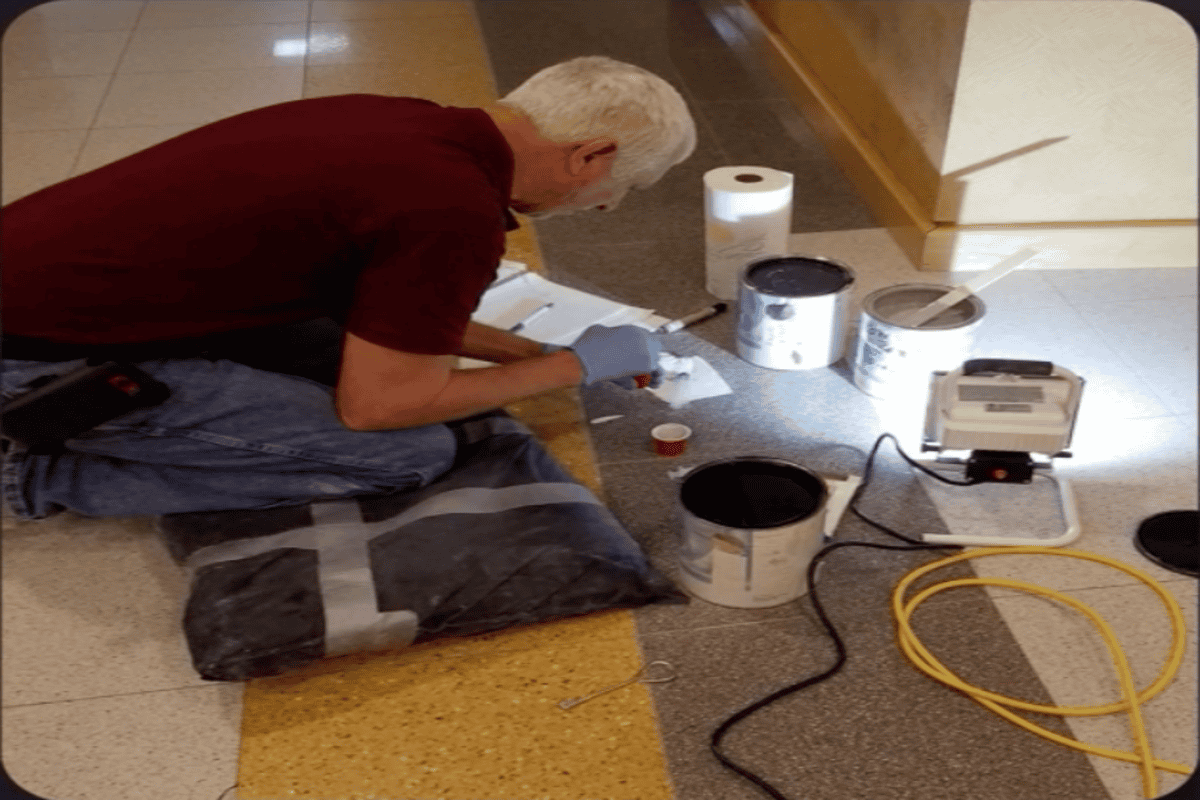
Terrazzo floors are known for their durability, distinctive appearance, and ability to perform in demanding commercial environments. However, even a durable terrazzo surface can eventually lose its shine after years of foot traffic, cleaning, dirt, equipment movement, and everyday use.
When that happens, building owners and facility managers often begin looking for ways to improve the floor’s appearance. Two terms frequently encountered are buffing terrazzo floors and polishing terrazzo floors.
Although these terms are sometimes used interchangeably, they do not always describe the same process.
Buffing is generally associated with lighter surface maintenance, while professional terrazzo polishing can involve a more comprehensive mechanical process designed to refine the actual terrazzo surface.
Knowing the difference matters because choosing the wrong treatment may produce only a temporary improvement or fail to address the actual condition of the floor.
This guide explains the difference between terrazzo polishing and buffing, when each approach may be appropriate, how terrazzo grinding fits into the process, and what commercial property owners should consider before deciding how to restore the appearance of an existing terrazzo floor.
Why Do Terrazzo Floors Lose Their Shine?
A terrazzo floor does not usually become dull overnight.
The appearance changes gradually as the surface is exposed to normal building activity.
In commercial properties, common causes of dullness include:
- Heavy pedestrian traffic
- Dirt and abrasive debris
- Improper cleaning products
- Worn topical coatings
- Scratches from equipment or furniture
- Moisture tracked through entrances
- Inconsistent maintenance
- Years of routine cleaning
- Surface contamination
- Previous maintenance treatments
Entrances, hallways, elevator lobbies, cafeterias, schools, hospitals, and other heavily traveled spaces may show wear faster than areas receiving limited traffic.
Small particles of dirt can also act as abrasives under foot traffic. Over time, repeated contact can contribute to fine scratches and reduced surface clarity.
A dull appearance does not necessarily mean the terrazzo needs replacement.
Depending on the condition of the floor, buffing, polishing, grinding, repair, or more extensive terrazzo restoration may be appropriate.
What Is Buffing Terrazzo Floors?
Buffing is generally a lighter maintenance procedure used to improve the appearance of a floor that is already in relatively good condition.
The process typically uses floor equipment and an appropriate pad to work the surface.
Depending on the existing floor system, buffing may help:
- Improve surface appearance
- Reduce minor dullness
- Improve uniformity
- Maintain an existing finish
- Enhance the appearance between more extensive maintenance procedures
Buffing is most appropriate when the underlying terrazzo remains in good condition and the primary concern is relatively minor surface dullness.
It should not automatically be considered a solution for deeper floor problems.
If the terrazzo has significant scratching, uneven wear, staining, damaged patches, cracks, or deterioration, simply buffing the surface may not correct those conditions.
What Is Terrazzo Polishing?
Professional terrazzo flooring polishing is a process used to refine the terrazzo surface and create a more consistent finish.
Depending on the condition of the floor, the process may use progressively finer abrasives to refine the surface.
Rather than simply treating the uppermost finish, mechanical polishing can work directly with the terrazzo itself.
The exact procedure depends on factors such as:
- Existing floor condition
- Depth of scratches
- Surface flatness
- Previous coatings
- Staining
- Repairs
- Desired level of sheen
- Type and age of terrazzo
A relatively well-maintained floor may require a less aggressive process.
A heavily worn floor may require grinding and honing before final polishing can begin.
Buffing vs. Polishing Terrazzo Floors
The primary difference between buffing and polishing is the level of surface correction involved.
Buffing
Buffing generally focuses on maintaining or improving an existing surface finish.
It may be suitable for:
- Light dullness
- Routine appearance maintenance
- Floors already in good physical condition
- Minor loss of sheen
Polishing
Polishing generally involves greater refinement of the actual terrazzo surface.
It may be appropriate for:
- Widespread dullness
- Fine scratching
- Uneven appearance
- Floors that no longer respond well to routine maintenance
- Floors being restored after repairs
- Surfaces that require mechanical refinement
Neither process should be selected based solely on how shiny the floor looks.
The condition below the visible surface should also be considered.
When Is Buffing Enough?
Buffing may be appropriate when the terrazzo remains smooth, intact, and relatively uniform.
For example, a commercial lobby may gradually lose some of its appearance between scheduled maintenance cycles without developing deeper scratches or physical damage.
In this situation, a lighter maintenance process may be sufficient.
Signs that buffing may be appropriate include:
- Minor dullness
- No significant cracks
- No major staining
- No deep scratches
- No widespread surface damage
- Existing finish remains relatively uniform
- Floor has been maintained consistently
A professional evaluation can help determine whether buffing is likely to provide the desired result.
When Does a Terrazzo Floor Need Polishing?
Polishing terrazzo floors may become appropriate when routine cleaning or lighter maintenance no longer produces a consistent appearance.
Common signs include:
Persistent Dullness
If the floor remains dull after normal cleaning and maintenance, the surface itself may need additional refinement.
Fine Scratching
Heavy pedestrian traffic can gradually create small scratches across the floor.
Mechanical polishing may help refine certain forms of surface wear.
Uneven Appearance
A floor may develop different levels of sheen between heavily traveled and lightly used areas.
Professional polishing can help create a more consistent appearance.
Aging Repairs
Older patches may wear differently from the original terrazzo.
Depending on the quality and condition of the repair, additional surface work may help integrate the repaired section more effectively.
Previous Coating Problems
Older maintenance systems can leave uneven buildup or worn areas.
The appropriate corrective process depends on the type of coating and condition of the underlying terrazzo.
Where Does Terrazzo Grinding Fit Into the Process?
Sometimes polishing alone is not enough.
When a floor has deeper surface damage or significant unevenness, terrazzo grinding may be required before polishing.
Grinding terrazzo uses mechanical equipment and abrasive tooling to remove a controlled amount of material from the surface.
The goal is not simply to make the floor shiny.
Grinding can help prepare the terrazzo for subsequent honing and polishing.
It may be required when the floor has:
- Deep scratches
- Surface irregularities
- Heavy wear
- Stubborn staining
- Poorly blended repairs
- Old surface treatments
- Uneven sections
- Significant deterioration
Because grinding is more aggressive than routine buffing or polishing, it should be performed as part of a properly planned restoration process.
Removing unnecessary material from terrazzo is not the goal. The process should be selected according to the actual condition of the floor.
Grinding, Honing, and Polishing: How They Work Together
A complete restoration may involve several stages.
Step 1: Floor Assessment
The existing floor should first be inspected.
The contractor may evaluate:
- Cracks
- Chips
- Stains
- Existing coatings
- Divider strips
- Previous repairs
- Surface flatness
- Hollow or unstable areas
- General wear patterns
This helps determine how aggressive the restoration process needs to be.
Step 2: Repairs
Cracks, chips, holes, damaged sections, and other defects may need to be addressed before final polishing.
Completing repairs first helps create a more consistent finished surface.
Step 3: Grinding
If necessary, grinding can remove surface damage and prepare the terrazzo for finer refinement.
Not every floor requires aggressive grinding.
Step 4: Honing
Honing uses progressively finer abrasives to refine the surface after grinding.
This stage helps reduce the visible effects of the previous abrasive step.
Step 5: Polishing
The floor is progressively refined toward the desired finish.
The appropriate level of polish can depend on the building, traffic, maintenance requirements, and appearance goals.
Step 6: Final Treatment
Depending on the terrazzo system and project specifications, additional protective or finishing treatments may be applied.
The final maintenance plan should also be discussed with the facility team.
Can You Use a Polish for Terrazzo Floor Surfaces?
Property owners sometimes search for a polish for terrazzo floor surfaces expecting a liquid product that can simply be applied to restore the original appearance.
This can be misleading.
A topical product may temporarily alter the appearance of a floor, but it does not necessarily correct scratches, unevenness, worn areas, or damage within the terrazzo surface.
Professional terrazzo polishing is different because it can involve mechanical refinement of the material itself.
Before applying any product, facility managers should understand:
- What type of terrazzo they have
- Whether a coating is already present
- What caused the dullness
- Whether the surface is damaged
- Whether previous treatments need to be removed
- What maintenance system will be used afterward
Using an incompatible product can make future maintenance more complicated.
Why Mechanical Polishing Can Be Important
Traditional floor maintenance can sometimes rely heavily on topical coatings to create shine.
Mechanical polishing takes a different approach by refining the actual floor surface.
For commercial buildings, this can provide several practical benefits.
More Natural Appearance
Mechanical refinement can reveal the aggregate and character of the terrazzo rather than relying entirely on a surface coating for appearance.
Reduced Dependence on Repeated Coating Cycles
A maintenance program based heavily on topical finishes may require periodic stripping and reapplication.
A properly developed mechanical polishing program can reduce reliance on this cycle, depending on the floor and building requirements.
Easier Condition Assessment
When the actual terrazzo surface is visible, it may be easier to identify cracks, patches, and other conditions that require attention.
Long-Term Maintenance Planning
A professional restoration contractor can recommend maintenance procedures appropriate for the polished surface.
Does Polishing Fix Terrazzo Damage?
Polishing should not be confused with repair.
A polishing machine cannot structurally repair a crack or replace missing terrazzo.
Physical damage may need to be corrected before polishing begins.
Common repairs can include:
- Crack repair
- Chip repair
- Patching holes
- Repairing damaged sections
- Correcting failed previous patches
- Addressing divider strip issues
- Repairing certain substrate-related problems
Once appropriate repairs are completed, grinding, honing, and polishing can help integrate the repaired area with the surrounding floor.
What About Cracked Terrazzo?
Cracking should be evaluated before the floor is polished.
Some cracks may be limited to the surface, while others may relate to movement or conditions below the terrazzo.
Simply polishing over a crack does not address its cause.
A professional terrazzo contractor should determine:
- The extent of the crack
- Whether movement is present
- Whether the substrate is involved
- What repair method is appropriate
- How the repair will be blended with the surrounding terrazzo
Once the necessary repairs are complete, the floor can proceed through the appropriate restoration stages.
Why Commercial Terrazzo Needs a Different Approach
Commercial terrazzo often experiences much more demanding conditions than residential flooring.
Consider the daily activity inside:
- Hospitals
- Schools
- Airports
- Government buildings
- Hotels
- Office towers
- Universities
- Retail centers
- Transportation facilities
These buildings may experience continuous pedestrian traffic along with carts, equipment, maintenance machines, moisture, and abrasive debris.
As a result, a maintenance method suitable for a lightly used floor may not be appropriate for a busy commercial corridor.
Facility managers should consider traffic patterns when determining where polishing or restoration is required.
High-Traffic Areas May Need More Attention
Not every section of a commercial terrazzo floor wears at the same rate.
Entrances often receive more moisture and grit.
Elevator areas experience concentrated foot traffic.
Hallways develop defined traffic lanes.
Cafeterias can be exposed to spills and frequent cleaning.
Instead of treating the entire building as if every square foot is identical, restoration planning should consider how each area is actually used.
This can help prioritize maintenance and avoid unnecessary work.
Can Polished Terrazzo Floors Stay Shiny?
Polished terrazzo floors can maintain an attractive appearance when supported by appropriate maintenance.
However, polishing is not a permanent substitute for cleaning and maintenance.
Several practices can help protect the floor:
- Use appropriate walk-off mats at entrances
- Remove abrasive dirt regularly
- Follow recommended cleaning procedures
- Avoid incompatible chemicals
- Clean spills promptly
- Use suitable floor-cleaning equipment
- Monitor high-traffic areas
- Schedule professional evaluation when wear becomes noticeable
Maintenance procedures should be appropriate for the specific terrazzo and finishing system.
Common Mistakes When Maintaining Terrazzo
Improper maintenance can make an otherwise durable floor appear older than necessary.
Using the Wrong Cleaning Chemicals
Aggressive or incompatible products may affect the floor or its finish.
Allowing Dirt to Accumulate
Dirt and grit can contribute to surface abrasion under foot traffic.
Applying Products Without Understanding the Existing Finish
Adding coatings or treatments without identifying what is already on the floor can create compatibility problems.
Waiting Until Damage Becomes Severe
Minor deterioration may be easier to address before it develops into a larger repair project.
Assuming More Shine Means Better Restoration
The goal should not automatically be the highest possible gloss.
The appropriate finish depends on the building, use, maintenance plan, and desired appearance.
How to Determine What Your Terrazzo Floor Needs
Commercial property owners should avoid selecting a treatment based solely on terminology.
Instead, start with the floor’s condition.
A professional assessment should answer questions such as:
- Is the floor simply dull?
- Are scratches superficial or deep?
- Are there cracks?
- Are divider strips damaged?
- Are previous repairs failing?
- Is the surface uneven?
- Are old coatings present?
- Does the floor require grinding?
- Can polishing achieve the desired result?
- Is broader terrazzo restoration necessary?
The answers help determine whether buffing, polishing, grinding, repair, or a combination of processes is appropriate.
Choosing a Terrazzo Restoration Contractor
Terrazzo restoration requires specialized knowledge, particularly when working with older commercial floors.
When evaluating contractors, ask about:
- Experience with terrazzo restoration
- Commercial project experience
- Grinding and polishing methods
- Crack repair capabilities
- Substrate repair experience
- Procedures for matching existing terrazzo
- Dust and work-area management
- Project scheduling
- Maintenance recommendations
A contractor should be able to explain why a particular process is being recommended rather than simply proposing the same treatment for every floor.
Frequently Asked Questions About Terrazzo Polishing
Q: What is the difference between buffing and polishing terrazzo floors?
A: Buffing is generally a lighter maintenance process intended to improve an existing finish, while professional terrazzo polishing can involve mechanically refining the terrazzo surface. The right option depends on the floor’s condition, level of wear, and desired result.
Q: Can buffing restore a very dull terrazzo floor?
A: It depends on why the floor is dull. If the issue is limited to minor surface wear, buffing may improve its appearance. If the terrazzo has deeper scratches, staining, uneven wear, or surface damage, grinding, honing, and polishing may be required.
Q: How do I know if my terrazzo needs grinding before polishing?
A: Grinding may be necessary when the floor has deeper scratches, significant wear, uneven areas, stubborn stains, old coatings, or repairs that need to be blended. A professional assessment can determine whether grinding terrazzo is necessary or whether a less aggressive process is sufficient.
Q: Does terrazzo polish remove cracks?
A: No. Polishing does not repair structural or physical cracks. Cracked areas should be evaluated and repaired using an appropriate method before the final polishing process.
Q: Can old terrazzo floors be polished again?
A: Many older terrazzo floors can be mechanically restored and polished if their condition allows it. Repairs, grinding, honing, and other preparation may be required before the final polishing stages.
Q: How often should commercial terrazzo floors be polished?
A: There is no universal schedule. The appropriate frequency depends on traffic levels, cleaning practices, building use, floor condition, and desired appearance. High-traffic areas may require attention sooner than less frequently used spaces.
Q: Should I use a store-bought polish for terrazzo floor surfaces?
A: A product labeled as floor polish is not necessarily the same as professional terrazzo polishing. Before applying a topical product, identify the type of terrazzo and existing finish and determine whether the floor actually requires cleaning, buffing, polishing, grinding, or restoration.
Final Thoughts: Choose the Process Based on the Floor
Buffing and polishing terrazzo floors can both play a role in maintaining commercial flooring, but they are not automatically interchangeable.
Buffing is generally better suited to lighter maintenance when the existing floor remains in good condition. Professional terrazzo flooring polishing can provide a deeper level of surface refinement when ordinary maintenance is no longer enough.
For floors with significant scratches, staining, unevenness, old coatings, cracks, or previous repairs, polishing alone may not be sufficient. Terrazzo grinding, honing, repair, and other restoration procedures may need to be completed first.
The most effective approach starts with understanding why the floor has lost its appearance.
Instead of automatically applying another coating or repeatedly buffing a deteriorated surface, commercial property owners should have the terrazzo evaluated to determine what the material actually needs.
A properly planned terrazzo restoration process can address existing damage, refine the surface, and establish a more appropriate maintenance strategy for the building.
For commercial properties with aging or heavily used terrazzo, professional assessment can help determine whether buffing, polishing, grinding, repair, or a combination of these processes provides the most appropriate path forward.