

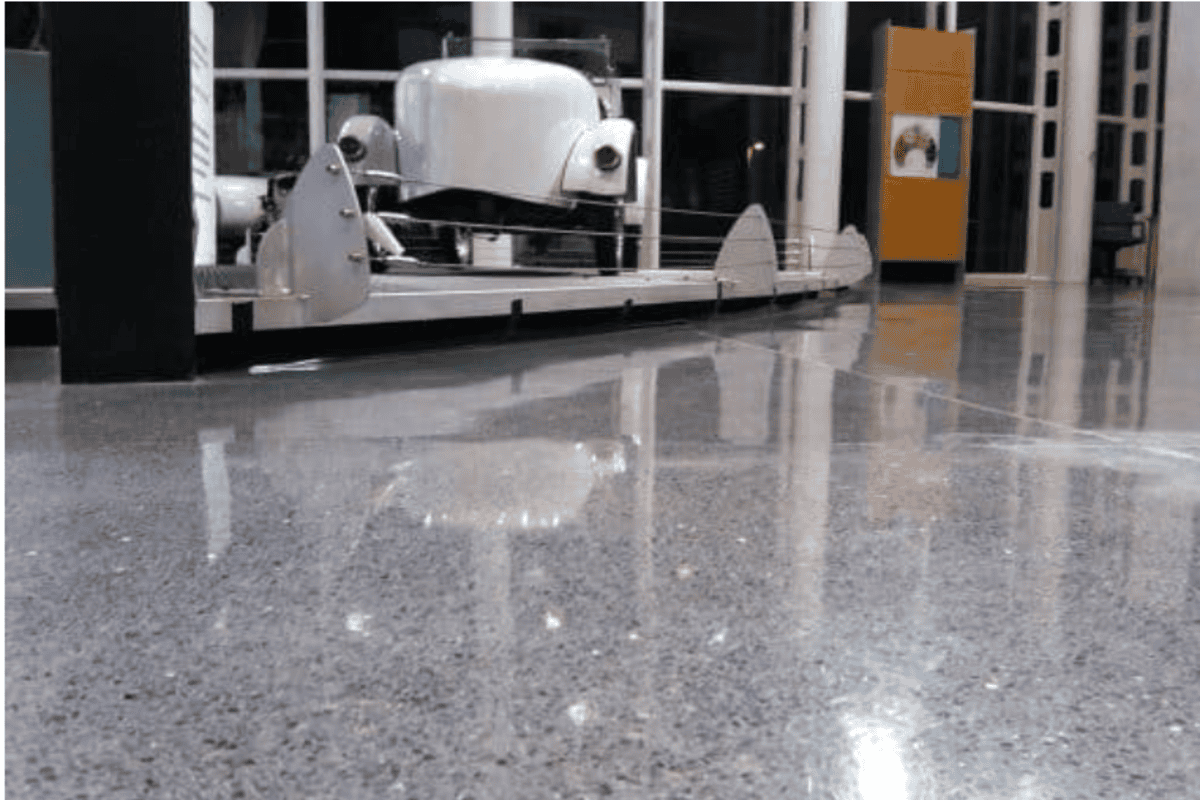
How Much Does Terrazzo Flooring Cost? A Guide for Commercial Property Owners
For commercial property owners and facility managers, flooring is more than a design decision. It affects maintenance budgets, daily operations, safety, appearance, and the long-term value of the building. Terrazzo has remained a popular flooring material for commercial properties because a properly installed and maintained floor can provide decades of service.
But how much does terrazzo flooring cost?
There is no single terrazzo floor price that applies to every commercial property. The total investment depends on the size of the area, type of terrazzo, condition of the existing substrate, design complexity, required repairs, installation method, and level of finishing.
For buildings that already have terrazzo, the financial decision can be even more important. A worn floor does not necessarily need to be removed. Terrazzo repair, grinding, polishing, and full terrazzo restoration may provide a practical alternative to demolition and replacement.
Understanding these cost factors can help property owners make a more informed decision about whether to install, repair, restore, or replace terrazzo flooring.
What Is Terrazzo Flooring?
Terrazzo is a composite flooring material traditionally created using marble, granite, quartz, glass, or other aggregate chips within a cementitious or epoxy binder. After installation, the surface is ground and polished to expose the aggregate and produce its distinctive appearance.
Terrazzo is frequently found in high-traffic environments such as:
- Schools and universities
- Hospitals and healthcare facilities
- Airports
- Government buildings
- Hotels
- Shopping centers
- Office buildings
- Museums
- Historic properties
- Transportation facilities
- Large commercial buildings
Its popularity in these settings is closely related to durability and long-term serviceability.
Unlike some flooring materials that are routinely removed once they become scratched or worn, terrazzo can often be repaired, reground, and polished. This ability to renew the existing surface is an important consideration when calculating the true long-term cost for terrazzo flooring.
How Much Do Terrazzo Floors Cost?
The cost of terrazzo depends heavily on whether you are considering a completely new installation or working with an existing terrazzo floor.
TerCon Systems’ published guidance notes that new terrazzo installation can represent a significant investment, particularly when custom materials and complex designs are involved. Existing terrazzo, however, can often be restored for considerably less than complete replacement.
For this reason, commercial property owners should avoid evaluating terrazzo based only on an initial square-foot figure.
Instead, consider three separate cost categories:
- New terrazzo installation
- Terrazzo repair and restoration
- Long-term maintenance
Each category has different cost drivers.
A contractor should inspect the floor and project conditions before providing an accurate estimate.
What Affects the Cost for Terrazzo Flooring?
Several variables influence the final price of a terrazzo project.
Understanding them can help commercial property owners evaluate estimates and determine why one project may cost substantially more than another.
1. Total Square Footage
The size of the project is one of the most obvious cost factors.
A small lobby requires less material and labor than a school corridor system, airport concourse, or multi-floor commercial building.
However, square footage should not be considered in isolation.
Larger open areas can sometimes be more efficient to work on than smaller areas containing numerous corners, doorways, columns, stairs, fixtures, and other obstacles.
For restoration projects, contractors must also evaluate how much of the existing floor requires repair before grinding and polishing can begin.
2. Type of Terrazzo
Different terrazzo systems have different installation requirements.
Two common categories are:
Cementitious terrazzo: Uses a cement-based binder and is frequently encountered in older buildings and historic properties.
Epoxy terrazzo: Uses an epoxy resin binder and is often selected for modern commercial projects because it can accommodate a broad range of colors, aggregates, and design possibilities.
Materials, substrate preparation, thickness, installation procedures, and finishing requirements can all affect the terrazzo floor price.
3. Condition of the Substrate
The finished terrazzo surface depends heavily on what is underneath it.
If the concrete substrate has cracks, movement, hollow areas, moisture issues, or other deficiencies, additional preparation or structural work may be necessary.
Installing new flooring over an unstable substrate can lead to problems later.
The same principle applies to terrazzo flooring restoration. A crack visible at the surface may indicate an underlying condition that should be investigated rather than simply covered.
Professional assessment is therefore an important part of determining realistic project costs.
4. Design Complexity
One reason terrazzo remains architecturally distinctive is its flexibility.
A commercial terrazzo installation may include:
- Multiple colors
- Custom aggregate combinations
- Logos
- Borders
- Patterns
- Geometric designs
- Decorative transitions
- Custom divider strip layouts
More complicated designs typically require additional planning, materials, layout work, and labor.
A large floor with a simple pattern may therefore have a different square-foot cost than a smaller but highly detailed installation.
How Divider Strips Affect Terrazzo Flooring Costs
A terrazzo divider strip serves both practical and decorative purposes.
Divider strips can separate colors and design sections, create patterns, define architectural features, and help organize the terrazzo installation.
Existing divider strips may also require attention during restoration.
Loose, damaged, bent, corroded, or missing strips can complicate terrazzo floor repairs. Repairs around the strip must be carefully integrated with the surrounding material to maintain the appearance and performance of the floor.
For this reason, divider strip condition should be included when assessing an older terrazzo floor.
New Terrazzo vs. Restoring Existing Terrazzo
Commercial property owners with existing terrazzo should carefully compare restoration with replacement before authorizing demolition.
A floor that looks dull, scratched, stained, cracked, or uneven may still have considerable service life remaining.
Professional terrazzo flooring restoration can involve several processes depending on the condition of the surface:
- Cleaning
- Crack repair
- Patching
- Divider strip repair
- Grinding
- Honing
- Polishing
- Sealing
- Structural repair where required
TerCon Systems describes its restoration process as including assessment, repair, grinding and honing, polishing, and sealing, with the specific approach depending on the floor’s condition.
This is why property owners should obtain a professional condition assessment before assuming replacement is necessary.
How Much Does Terrazzo Restoration Cost?
The cost of restoring terrazzo floors varies according to floor condition and the amount of work required.
TerCon Systems has previously published general restoration ranges of approximately $3 to $7 per square foot for certain grinding and polishing projects, while noting that cracks, divider strip work, floor condition, and project complexity can affect the final price.
These figures should be treated as general guidance rather than a guaranteed quote.
A lightly worn floor that primarily needs polishing is very different from a floor containing widespread cracking, damaged patches, deep staining, hollow areas, or substrate problems.
A site assessment remains the most reliable way to determine actual project cost.
What Is Included in Terrazzo Restoration?
Not every restoration project requires the same treatment.
The contractor should determine what the floor actually needs rather than automatically applying the most aggressive process.
Terrazzo Repair
Terrazzo repair addresses localized damage such as cracks, chips, holes, failed patches, and damaged sections.
Professional repair generally involves more than filling a visible opening.
The damaged area must be evaluated, prepared, repaired with compatible materials, and blended as closely as practical with the surrounding floor.
Older floors can make matching particularly challenging because aggregate, binder color, wear, and aging can vary considerably.
Terrazzo Grinding
Terrazzo grinding mechanically removes a controlled amount of material from the surface.
Grinding terrazzo may be necessary when a floor has:
- Uneven areas
- Surface damage
- Deep scratches
- Stubborn staining
- Old coatings
- Poorly blended repairs
- Significant wear
Grinding can create the foundation for subsequent honing and polishing.
TerCon Systems uses grinding and honing as part of its restoration process to address stains, scratches, and surface imperfections before polishing.
Terrazzo Polishing
After the floor has been properly prepared, terrazzo polish procedures refine the surface to achieve the desired level of finish.
Polishing terrazzo floors can improve clarity and reflectivity while revealing the aggregate within the floor.
The amount of work required depends on the starting condition and the desired finish.
A floor that has been regularly maintained may require less corrective work than a neglected surface that has been exposed to decades of traffic.
Polishing vs. Buffing Terrazzo Floors
Property owners sometimes use “polishing” and “buffing” interchangeably, but they are not necessarily the same process.
Buffing terrazzo floors is generally a lighter surface-maintenance procedure. It can help improve the appearance of a floor that is already in relatively good condition.
Professional polishing can involve progressively refining the terrazzo itself using specialized abrasives and equipment.
This distinction matters when budgeting.
If the floor has deeper scratches, uneven wear, staining, damaged repairs, or surface deterioration, simple buffing may not address the underlying condition.
An experienced terrazzo floor repair company can determine whether maintenance, polishing, grinding, or more extensive restoration is appropriate.
Repairing Terrazzo Can Cost Less Than Replacing It
When commercial terrazzo becomes damaged, replacement may initially seem like the straightforward solution.
However, removal introduces additional considerations.
Replacement can involve:
- Demolition
- Disposal
- Substrate preparation
- New flooring materials
- Installation labor
- Equipment
- Restricted access
- Business disruption
- Longer project schedules
TerCon Systems has previously compared restoration with replacement and noted that restoration can represent a substantially lower investment when the existing floor remains a suitable candidate for repair.
For a large commercial building, even a relatively small difference in square-foot cost can become significant when multiplied across thousands of square feet.
Do Cracks Increase Terrazzo Floor Repair Costs?
Yes.
The number, size, type, and cause of cracks can affect the scope of a restoration project.
A few isolated cosmetic cracks may require relatively limited intervention.
A floor with extensive cracking may require more detailed investigation.
Property owners should also remember that a crack is not always purely cosmetic. Movement in the substrate or other underlying conditions can contribute to cracking.
Simply covering the visible crack without considering why it developed may not provide an appropriate long-term solution.
TerCon Systems offers crack and substrate repair among its core restoration services, reflecting the importance of addressing conditions below the visible surface when necessary.
How Building Use Influences Terrazzo Restoration Costs
Commercial buildings do not experience uniform floor wear.
Consider a hospital entrance compared with a private office.
The entrance may experience thousands of footsteps, carts, moisture, dirt, and debris, while the office may receive relatively limited traffic.
High-wear locations commonly include:
- Entrances
- Elevator lobbies
- Main corridors
- Cafeterias
- Retail areas
- Reception spaces
- Transportation terminals
- School hallways
- Hospital corridors
These areas may require more grinding, repair, or polishing than low-traffic spaces.
Facility managers should therefore consider wear patterns, not just total square footage, when planning a restoration budget.
Can Terrazzo Restoration Reduce Long-Term Flooring Costs?
Potentially, yes.
The advantage of terrazzo is that the existing material can often be renewed rather than discarded when the surface begins showing its age.
A well-planned restoration program can help commercial property owners preserve an existing architectural asset while avoiding unnecessary demolition.
TerCon Systems also highlights mechanical diamond polishing as an alternative to repeated strip-and-wax maintenance, with the goal of refining the stone itself rather than relying solely on topical coatings.
The most economical strategy depends on the individual floor, its condition, traffic levels, and maintenance history.
Why the Cheapest Terrazzo Quote Is Not Always the Lowest-Cost Option
Commercial property owners understandably compare bids.
However, selecting a contractor based only on the lowest initial price can create additional expenses if important steps are omitted.
Before comparing quotes, determine whether each contractor is proposing the same scope.
Ask whether the estimate includes:
- Floor assessment
- Crack repair
- Substrate repair
- Patching
- Divider strip work
- Grinding
- Honing
- Polishing
- Sealing
- Edge work
- Cleanup
- Mobilization
- Protection of adjacent surfaces
One quote may appear more expensive because it addresses conditions another proposal has excluded.
Comparing scope as well as price provides a clearer picture of actual value.
Questions to Ask a Terrazzo Floor Repair Company
Before choosing a terrazzo floor repair company, commercial property owners and facility managers should ask several questions.
What condition is the existing terrazzo in?
The contractor should be able to explain whether the floor primarily needs maintenance, repair, grinding and polishing, or more comprehensive restoration.
What is causing the visible damage?
Understanding the source of cracking, movement, staining, or deterioration can help reduce the risk of repeating the same problem.
Can the existing terrazzo be restored instead of replaced?
If restoration is practical, ask what work would be required and how it compares with replacement.
Are repairs included in the quoted price?
Determine whether crack repair, patches, divider strips, and other corrective work are included or billed separately.
What finish will the floor have?
Make sure expectations regarding sheen and overall appearance are established before work begins.
How will the project affect building operations?
Commercial buildings often need to remain functional during flooring projects.
Ask about scheduling, work zones, access restrictions, dust control, and estimated downtime.
Budgeting for a Commercial Terrazzo Project
For budgeting purposes, property owners should start with a professional inspection rather than relying exclusively on generic online square-foot prices.
A useful budgeting process includes:
- Measuring the total flooring area.
- Identifying high-traffic and heavily damaged sections.
- Documenting cracks, patches, stains, and divider strip problems.
- Evaluating whether structural or substrate repair may be necessary.
- Determining the desired finish.
- Comparing restoration and replacement options.
- Requesting a detailed scope of work.
- Considering ongoing maintenance requirements.
This approach produces a more meaningful estimate than simply multiplying square footage by an average online price.
Frequently Asked Questions About Terrazzo Flooring Costs
Q: How much does terrazzo flooring cost per square foot?
A: There is no single terrazzo floor price that applies to every commercial project. Costs vary depending on the terrazzo system, total square footage, design complexity, substrate condition, materials, labor, and required preparation. A professional site assessment is the best way to determine an accurate cost for terrazzo flooring.
Q: Is terrazzo expensive for commercial buildings?
A: Terrazzo can have a higher initial installation cost than some flooring materials, particularly when custom aggregates, colors, patterns, or divider strips are involved. However, commercial property owners should consider its long service life, durability, and ability to be repaired and restored when evaluating overall value.
Q: Is it cheaper to restore terrazzo floors or replace them?
A: In many cases, restoring terrazzo floors can be more cost-effective than removing and replacing an existing floor, provided the terrazzo is suitable for restoration. Terrazzo restoration may include repairs, grinding, honing, and polishing to renew the existing surface without complete demolition.
Q: What factors increase terrazzo floor repair costs?
A: The extent of cracking, damaged or missing terrazzo divider strips, deep stains, chips, hollow areas, previous repairs, substrate problems, and uneven surfaces can all affect terrazzo floor repair costs. Floors requiring extensive terrazzo grinding or structural repairs will generally require more labor than floors that primarily need polishing.
Q: Does polishing terrazzo floors remove scratches and stains?
A: It depends on the severity of the damage. Light surface wear may improve through professional polishing, while deeper scratches, stains, and uneven areas may require terrazzo grinding and honing before polishing. The floor should be inspected to determine the appropriate restoration process.
Q: What is the difference between buffing terrazzo floors and polishing them?
A: Buffing terrazzo floors is generally a lighter maintenance process used to improve the appearance of a surface that is already in relatively good condition. Professional terrazzo flooring polishing can involve progressively refining the floor with specialized equipment and abrasives to achieve a more consistent finish.
Q: Can old terrazzo floors be restored?
A: Many older terrazzo floors can be restored even when they appear dull, scratched, stained, or cracked. The appropriate process may involve terrazzo repair, patching, grinding, honing, polishing, and sealing. The condition of the floor and its underlying substrate should be evaluated before deciding between restoration and replacement.
Final Thoughts: Look Beyond the Initial Terrazzo Floor Price
So, how much does terrazzo flooring cost?
The answer depends on the condition of the property, the type of terrazzo, the size and complexity of the project, and whether you are installing a new floor or restoring an existing one.
For commercial property owners, focusing only on the initial terrazzo floor price may not provide the complete picture. An existing terrazzo floor that looks worn, scratched, cracked, or dull may still have significant service life remaining.
Professional terrazzo repair, terrazzo grinding, and polishing terrazzo floors can help address damage and restore the appearance of an existing surface. In suitable situations, terrazzo flooring restoration may also help property owners avoid the cost and disruption associated with complete floor removal and replacement.
The best starting point is a professional assessment of the existing floor. A qualified terrazzo floor repair company can identify damaged areas, evaluate the substrate, inspect divider strips, determine the appropriate restoration process, and provide a project-specific estimate.
For commercial property owners considering restoring terrazzo floors, understanding the condition of the existing surface and the work required provides a much clearer basis for budgeting than relying on a generic square-foot price alone.