

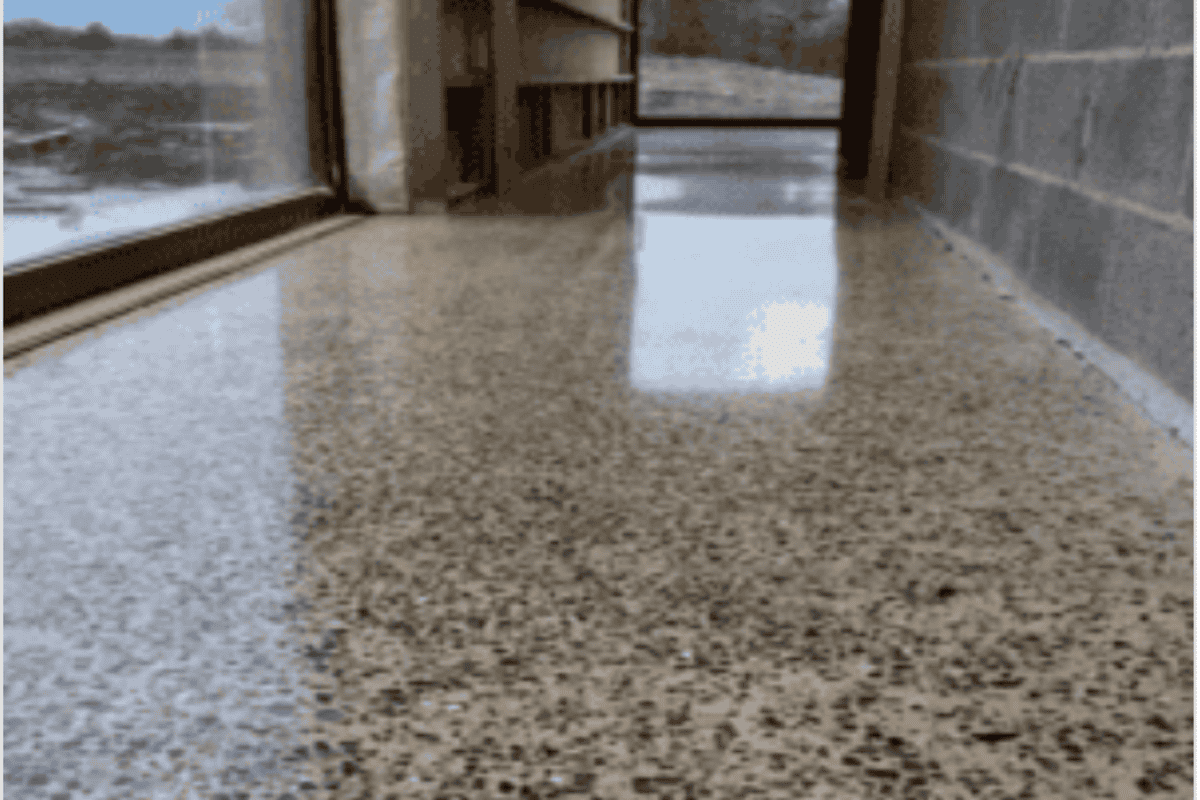
The Anatomy of a Terrazzo Floor: What Lies Beneath the Surface
Most people admire a terrazzo floor for what they can see. The polished finish, decorative aggregates, and impressive durability often make terrazzo one of the most attractive flooring options available. Yet what makes terrazzo truly remarkable is what lies beneath the surface.
Whether found in a historic courthouse, a busy airport, a hospital corridor, or a modern commercial building, every terrazzo floor is made up of multiple layers working together to create a strong, long-lasting flooring system. Understanding these layers can help property owners appreciate why terrazzo has remained one of the most reliable flooring solutions for generations.
It can also help explain why professional terrazzo restoration, terrazzo repair, and terrazzo maintenance are so important when preserving these floors.
Let’s take a closer look at the anatomy of a terrazzo floor and discover what lies beneath the surface.
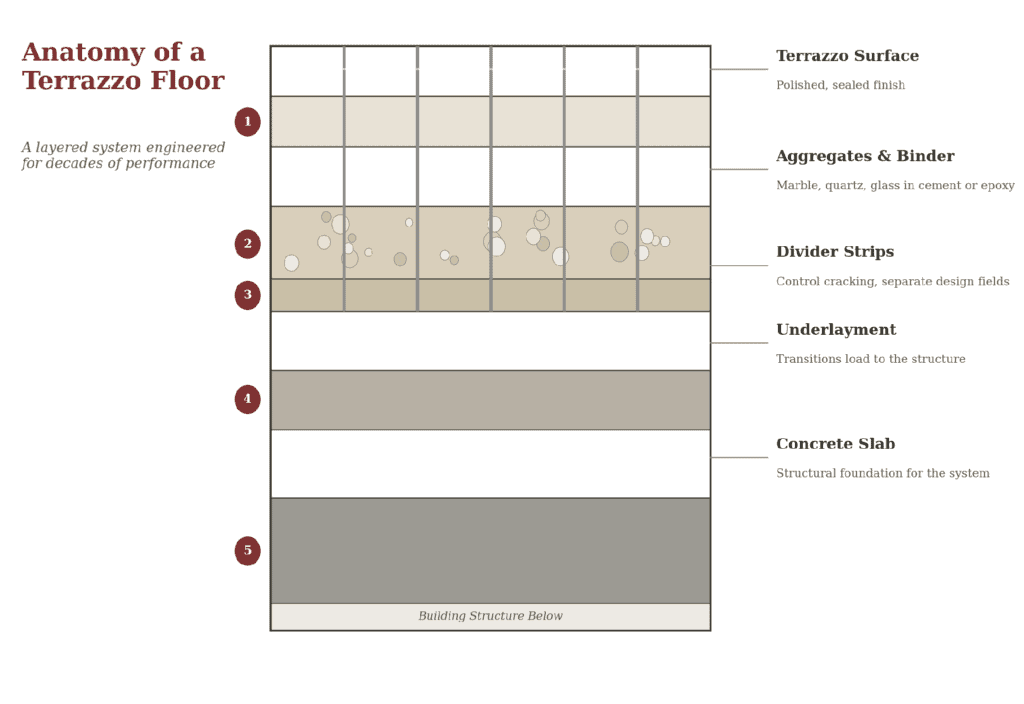
Figure: The five layers that make up a typical terrazzo flooring system.
The Visible Layer: The Terrazzo Surface
When people think about terrazzo, they are usually referring to the finished surface layer.
This top layer is made from a mixture of aggregates and a binding material. Aggregates can include marble, granite, quartz, recycled glass, or other decorative materials. The binder may be cement-based or resin-based, depending on the type of terrazzo installation.
After installation, the surface is ground, polished, and sealed to create the smooth appearance that terrazzo is known for.
The visible surface delivers many of the terrazzo flooring benefits that property owners appreciate, including:
- Exceptional durability
- Design flexibility
- Easy maintenance
- Long service life
- Resistance to heavy foot traffic
While the surface receives the most attention, it is only one part of the overall flooring system.
Understanding the Role of Aggregates
The aggregates embedded within terrazzo are responsible for much of its visual appeal.
Different aggregate combinations create unique patterns, colours, and textures. In some commercial terrazzo flooring projects, custom blends are used to incorporate branding elements, logos, or artistic designs.
Beyond aesthetics, aggregates contribute to the floor’s strength and wear resistance. Harder materials often provide increased durability in high-traffic environments such as airports, schools, and hospitals.
This is one reason terrazzo flooring for schools, terrazzo flooring for hospitals, and terrazzo flooring for airports remains a popular choice today.
The Binder: Holding Everything Together
The binder acts as the glue that holds the terrazzo system together.
Historically, cement was the primary binder used in terrazzo installation. Many historic floors still rely on cement-based systems that have remained functional for decades.
Today, epoxy terrazzo flooring has become increasingly popular because it offers several advantages:
- Greater design flexibility
- Faster installation
- Reduced thickness
- Improved stain resistance
- Enhanced color consistency
The choice between traditional and epoxy terrazzo flooring often depends on project requirements, building conditions, and design goals.
Both systems can provide excellent performance when installed and maintained properly.
Terrazzo Divider Strips: More Than Decoration
One feature that many people notice immediately is the network of terrazzo divider strips running throughout the floor.
While these strips contribute to the floor’s appearance, they serve an important structural purpose as well.
Terrazzo divider strips help:
- Control cracking
- Separate design sections
- Accommodate movement
- Improve installation accuracy
Without properly placed divider strips, terrazzo would be much more vulnerable to stress-related damage.
During terrazzo floor restoration projects, divider strips are often inspected to ensure they remain securely integrated within the flooring system.
The Underlayment Layer
Beneath the terrazzo surface lies the underlayment layer.
This component serves as a transition between the terrazzo topping and the building structure below.
The underlayment helps:
- Distribute loads
- Support the terrazzo surface
- Improve bonding
- Reduce movement-related stress
Problems within the underlayment can sometimes lead to terrazzo floor cracks, uneven surfaces, or bonding failures.
This is why professional terrazzo flooring contractors carefully evaluate underlying conditions before beginning any major restoration project.
The Concrete Slab Foundation
Every terrazzo floor ultimately depends on the structural slab beneath it.
The concrete slab provides the foundation that supports the entire flooring system.
If movement, settlement, or moisture problems occur within the slab, the effects may eventually become visible on the terrazzo surface.
Common issues linked to slab conditions include:
- Terrazzo floor cracks
- Surface separation
- Uneven wear patterns
- Moisture-related staining
When performing terrazzo floor repair, identifying the source of these problems is often just as important as repairing the visible damage.
Why Moisture Control Matters
One of the most common threats to terrazzo is moisture intrusion.
Water can affect both traditional and epoxy terrazzo flooring systems if it becomes trapped beneath the surface.
Potential consequences include:
- Terrazzo floor stains
- Surface discoloration
- Adhesion failures
- Expansion-related damage
- Mold concerns in surrounding materials
This is why moisture testing is often an important step in the terrazzo restoration process.
Professional restoration specialists frequently investigate moisture conditions before recommending repair strategies.
How Wear Develops Over Time
Despite its durability, terrazzo is not completely immune to wear.
Years of foot traffic gradually affect the surface finish. In high-traffic buildings, pathways often become visible as the shine diminishes in frequently used areas.
Over time, property owners may notice:
- Reduced gloss
- Minor scratching
- Surface dullness
- Localized staining
Fortunately, these issues can often be addressed through terrazzo floor refinishing, resurfacing, and polishing.
Many dramatic terrazzo restoration before-and-after projects involve floors that were structurally sound but visually worn.
The Importance of Terrazzo Maintenance
A terrazzo floor is a long-term investment, but like any investment, it requires proper care.
Regular terrazzo maintenance helps preserve both appearance and performance.
Effective terrazzo floor care includes:
- Routine dust mopping
- Prompt spill cleanup
- Neutral pH cleaning products
- Scheduled terrazzo floor cleaning
- Periodic terrazzo floor sealing
- Professional terrazzo polishing services when needed
Following proper terrazzo floor maintenance tips can significantly extend the floor’s lifespan while reducing future repair costs.
Restoration vs. Replacement: Understanding Your Options
When damage occurs, many property owners immediately assume replacement is necessary.
In reality, terrazzo floor replacement is often avoidable.
A qualified terrazzo restoration company can assess the condition of the flooring system and determine whether restoration is a viable option.
When comparing terrazzo floor replacement vs. restoration, restoration often provides significant advantages:
- Lower overall costs
- Reduced disruption
- Preservation of original materials
- Faster project completion
Because terrazzo flooring cost can be substantial for new installations, restoration often delivers exceptional value when the existing floor remains structurally sound.
Why Professional Assessment Matters
Successful restoration begins with understanding the condition of every layer within the flooring system.
A floor may appear damaged on the surface while remaining structurally healthy beneath. Conversely, a small visible crack may indicate a larger issue below.
An experienced terrazzo restoration contractor evaluates:
This comprehensive approach helps ensure that repairs address both visible symptoms and underlying causes.
Nationwide Terrazzo Restoration Services
TerCon Systems brings the same engineering-led approach to every project, regardless of location. Our teams regularly serve property owners in Michigan, Florida, Illinois, Indiana, New Jersey, New York, North Carolina, Ohio, Pennsylvania, and Wisconsin.
To learn more about our work in your area, visit our full list of service locations, or get a free quote to start a project assessment.
Preserving a Flooring System Built to Last
One of the greatest strengths of terrazzo is its longevity.
The combination of durable aggregates, strong binders, supportive underlayment, and a stable structural foundation allows terrazzo to outperform many modern flooring alternatives.
When supported by proper terrazzo maintenance, professional terrazzo restoration services, and periodic refinishing, a terrazzo floor can remain attractive and functional for decades.
Understanding what lies beneath the surface helps property owners make better decisions about care, repair, and long-term preservation.
Frequently Asked Questions
What is the main layer that people see in a terrazzo floor?
The visible layer is the terrazzo surface itself, which consists of decorative aggregates combined with a cement or epoxy binder that is ground and polished to create a smooth finish.
What do terrazzo divider strips do?
Terrazzo divider strips help control cracking, separate design sections, accommodate movement, and improve installation accuracy while also contributing to the floor’s appearance.
Why is moisture a concern for terrazzo floors?
Moisture can lead to staining, adhesion failures, surface damage, and other problems if it becomes trapped beneath the terrazzo system.
Can worn terrazzo floors be restored?
Yes. Many worn floors can be restored through terrazzo floor polishing, refinishing, resurfacing, and other professional restoration techniques.
Is restoration usually better than replacement?
In many cases, yes. Terrazzo floor restoration is often more cost-effective and less disruptive than complete terrazzo floor replacement when the floor remains structurally sound.
How long can a terrazzo floor last?
With proper care and maintenance, terrazzo flooring’s lifespan can exceed 75 to 100 years, making it one of the most durable flooring options available. For a professional evaluation of your floor, contact our team or explore more insights on our blog.